-
 play_arrow
Praise 24/7 NO Today's Best Gospel


Don Lemon Arrest and Georgia Fort Case Expose Unequal Press Freedom for Black Journalists.
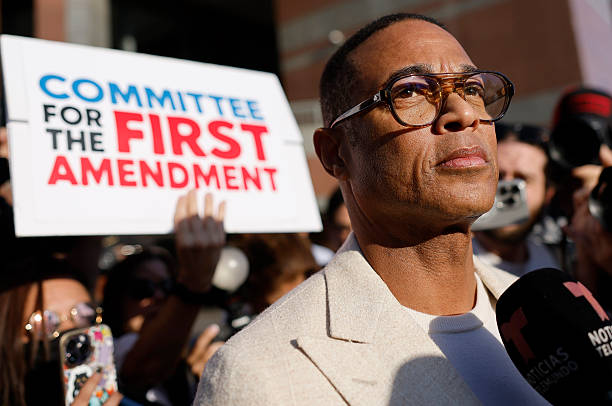
Don Lemon Arrest and Georgia Fort Case Expose Unequal Press Freedom for Black Journalists.
(ThyBlackMan.com) Don Lemon knew he was going to be arrested.
On January 18, he flew from Minneapolis to Chicago to emcee the MLK Breakfast for PUSH Excel the next morning. He was expert and gracious, as always—but he also dropped a couple of quiet bombs. Lemon all but said he was under siege. He didn’t list every case or name every colleague. He didn’t have to. The message was clear: his arrest was coming.
Lemon understands power. He understands pretext. And he understands that when Black journalists challenge the state, dominant media narratives, or official police accounts—especially during moments of racial crisis—the First Amendment does not disappear. It becomes conditional, enforced through discretion rather than principle.
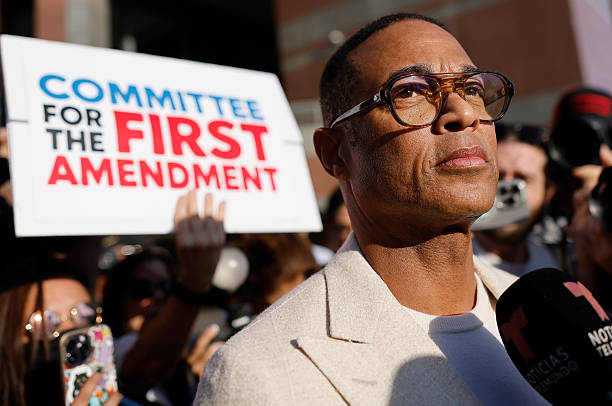
The “good news,” if one can call it that, is that Lemon is a man of means. He has elite legal representation and the resources to contest a pretextual arrest. His detention—on thin, politicized grounds—will cost him time, money, and energy, but it is unlikely to end in conviction. That outcome is not justice. It is insulation. And insulation is rare.
Lemon did not name Georgia Fort, an independent Black woman journalist who was also arrested while doing her job. Fort lacks the structural protections that often determine whether constitutional violations are challenged or quietly absorbed. She does not have a corporate employer, a national platform, or a legal war chest. She was livestreaming when she was taken into custody. Her arrest did not dominate cable news. No emergency panels were convened to debate its implications for press freedom. That omission matters.
Because when Black journalists are targeted, institutional backing determines whether an arrest is treated as a constitutional crisis or as collateral damage. A famous journalist’s arrest is framed as a First Amendment test case. An independent Black woman journalist’s arrest is treated as an unfortunate footnote—if it is acknowledged at all.
Fort’s arrest is not incidental to Lemon’s.
It is the point.
Her case illustrates how press freedom is rationed through selective enforcement. The same act of journalism—documenting police conduct, challenging official narratives, recording public events—can be protected speech or criminalized behavior depending on who performs it and who stands behind them. Credentials function as shields. Independence functions as exposure.
This is not an aberration; it is a pattern. The state does not need to silence all journalists to chill speech. It needs only to arrest the least protected, drain their resources, interrupt their work, and allow the rest to absorb the lesson. This is how constitutional rights erode in practice: not through formal repeal, but through discretionary enforcement; not through censorship, but through deterrence.
Black journalists have been disciplined for exercising First Amendment rights since the 19th century. From Ida B. Wells to Georgia Fort, the pattern is consistent. When Black journalists are arrested, surveilled, sued, or financially depleted, the issue is rarely the alleged offense. It is discipline. It is viewpoint discrimination enforced through pretext. It is the strategic narrowing of who can safely speak.
The First Amendment has never applied evenly. For Black journalists, it has always been provisional—recognized in theory, contested in practice, and withdrawn precisely when it is most needed.
Don Lemon knew what was coming because history repeats itself.
The question is not whether Lemon will survive this moment—he likely will.
The question is whether we are finally willing to tell the truth about press freedom when Black journalists like Georgia Fort are the ones exercising it.
That question matters—especially during Black History Month, a century after Carter G. Woodson created Negro History Week to confront the deliberate erasure of Black truth. The intimidation of Black voices is not new. What is new is the brazenness: retaliation politics dressed up as law enforcement, grievance masquerading as governance, and power exercised as erasure.
Finish story here; Don Lemon Arrest and Georgia Fort Case Expose Unequal Press Freedom for Black Journalists.

-

Keepin’ It Real
with Jojo Walker & Jazzy Jenn
For every Show page the timetable is auomatically generated from the schedule, and you can set automatic carousels of Podcasts, Articles and Charts by simply choosing a category. Curabitur id lacus felis. Sed justo mauris, auctor eget tellus nec, pellentesque varius mauris. Sed eu congue nulla, et tincidunt justo. Aliquam semper faucibus odio id varius. Suspendisse varius laoreet sodales.
close

Post comments (0)