-
 play_arrow
Praise 24/7 NO Today's Best Gospel


Miles Davis Refused To Become His Own Tribute Act.
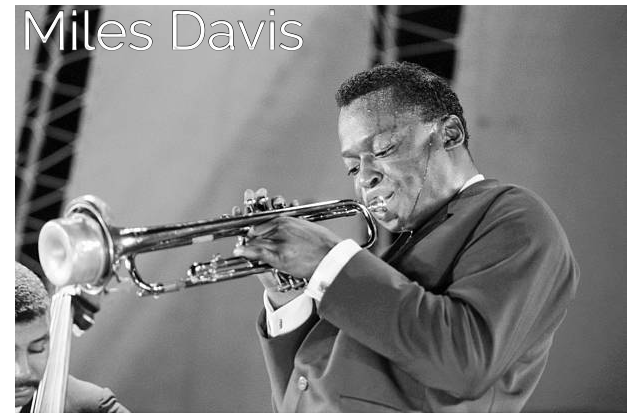
Miles Davis Refused To Become His Own Tribute Act.
(ThyBlackMan.com) Most cats find a sound and ride it till the wheels come off. They stumble onto something that works, the crowd claps, the checks clear, and they spend the next thirty years doing a slightly tired version of the thing that made them. Can’t blame them either. Comfort is a warm blanket, and the industry pays you to stay under it. Miles Davis looked at that blanket and set it on fire. Every single time.
That’s the thing folks miss when they hang the word genius on him like it explains the whole story. Yes, the man could play. Yes, the tone was unlike anybody breathing, that lonely, vulnerable, muted cry that sounded like a grown man admitting something he’d never say out loud. But plenty of people can play. What separated him from the pack was refusal. A flat out unwillingness to stand still long enough for the world to put a frame around him and call it finished.
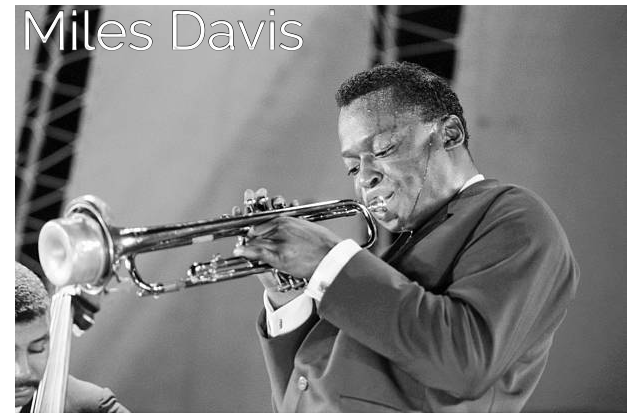
Go back to the beginning. A youngster raised in East St. Louis, the son of a dental surgeon, shows up in New York chasing Charlie Parker like the man was oxygen. For a while, he is a bebop soldier, standing next to Bird on those Savoy and Dial sessions, trying to keep up with a hurricane. Now here’s the truth nobody wants to say plain. In that setting, Miles was not the fastest gun. He did not have Dizzy’s stratosphere range or Bird’s terrifying velocity. A lesser mind would have spent his whole life trying to outrun people he could not outrun. Instead, he did something wiser. He asked himself a different question. Not how fast, but how deep. Not how many notes, but which ones. That instinct, choosing space over speed, would define him for the next four decades.
So by 1949, he is already bored with the very thing he came to master. He gathers Gil Evans and a nonet, brings in a French horn and a tuba, and cuts the sessions that later became known as Birth of the Cool. Slower. Rounder. More breathing room where bebop had crammed a thousand syllables. He basically walked out of the loudest room in America and started whispering. That whisper became a whole movement. West Coast players ran with that softer, airier feeling for years. Miles had already gone by then.
People think of the fifties as his golden stretch, and in a way it was. He kicked heroin, cleaned himself up through pure stubbornness, and put together a band that had no business being that good. John Coltrane on tenor. Red Garland on piano. Philly Joe Jones behind the drums. Paul Chambers holding it down on bass. They swung hard, burned through standards, cut Round About Midnight, and knocked out those marathon Prestige dates that still sound alive today. Any normal artist plants a flag right there and builds a career on the hard bop mountain. You know what Miles did instead.
Kind of Blue happened in 1959, and to this day it might be the best selling jazz record ever made. But understand what it actually was. It was a rebellion against the very sophistication he had helped perfect. Bebop and hard bop had gotten so busy with chord changes that a soloist was basically running an obstacle course, thirty two bars of hairpin turns. Miles said forget the obstacle course. Let’s build the tune on scales, on modes, give the man two chords and a mood and let him live inside it. So Coltrane stretches out, Cannonball Adderley testifies, Bill Evans lays down those impressionist clouds, and the whole thing floats. Modal playing changed how everybody after them approached improvising. Miles handed the future a doorway and, naturally, strolled through to the next thing.
Now the second quintet. This is where I get emotional, because for my money it is the most quietly revolutionary group of the whole run. Wayne Shorter writing tunes from some other galaxy. A baby faced Tony Williams behind the kit, rewriting what time could even mean. Herbie Hancock and Ron Carter operating on telepathy. E.S.P., Miles Smiles, Sorcerer, Nefertiti. That band took the freedom the avant garde was chasing and made it swing without ever tipping into chaos. They played so loose it felt like the music might fall apart at any second, and it never did, because underneath the looseness was iron. Most bandleaders would kill to lead one group that important. Miles had already led three or four, and he was staring at the door again.
Because the sixties were ending and something loud was happening out in the streets. Sly Stone. Jimi Hendrix. James Brown teaching everybody about the one. Young Black folks were plugging in, and the concert halls were emptying out while the arenas filled up. A lot of the old lions sneered at all that, called it noise, guarded their tradition like a museum. Miles did the opposite. He plugged in too. In a Silent Way, released in 1969, stretched two side long meditations over Fender Rhodes and electric guitar, patient as a sunrise. Then Bitches Brew dropped in 1970 and split the room clean in half.
You have to sit with how bold that record was. A double album, murky and swampy and menacing, electric keyboards stacked deep, bass lines locked in a groove, the horn cutting through the storm like a warning. The purists lost their minds. Said he had sold out, betrayed the tradition, chased the young dollar. Miles just kept walking. On the Corner in 1972 went even further, all rhythm and repetition and street funk, with sitar and tabla mixed in. Critics hated it at the time, but years later, hip hop and electronic producers would dig through it like scripture, hearing something in those grooves that the jazz gatekeepers had missed.
That’s the pattern, and once you see it, you can’t unsee it. He was never where you left him. Every time a movement he started grew comfortable enough to have followers and a rulebook, Miles was already three rooms down the hall building something those followers would have to catch up to. Bebop, cool, hard bop, modal jazz, the electric brew, the funk. Six or seven lifetimes of innovation stacked inside one restless man who apparently could not stand the sound of his own yesterday.
He paid for it too. The reinventions cost him. Old fans felt abandoned. Critics who had crowned him kept trying to drag him back to whatever era they personally loved best. Health broke him down, and he vanished for most of the late seventies, silent, sick, worn out. When he came back in the eighties, he even put his horn on Cyndi Lauper’s Time After Time and Michael Jackson’s Human Nature on You’re Under Arrest, then pushed deeper into the synthesizer heavy, studio shaped world of Tutu. Some of that later work does not carry the same untouchable glow as the classic records, but look at the spirit of it. A man in his sixties, a legend who could have coasted on Kind of Blue royalties forever, was still reaching toward whatever the kids were making. Still refusing to become his own tribute act.
That’s the lesson buried under all the accolades. We love to make our heroes into monuments, freeze them in their prettiest moment and light a candle. Miles would have hated that. His whole life was an argument against standing still, a forty year sermon on the danger of letting yesterday’s applause become today’s cage. He understood something most of us never do, that the reward for mastering a thing is not the right to repeat it forever. It is the freedom to walk away and start over as a beginner, on purpose, again and again.
So no, don’t just call him a jazz genius and leave it there. That word is too small and too still for what he was. The man was a shape shifter, an escape artist, a restless spirit who treated his own legend like something to be outrun. He kept changing before the world could catch him. And every time we finally caught up, we found the same thing waiting. An empty chair, still warm, and the faint sound of him somewhere up ahead, already playing something new.
This brother loves poetry, music, and the culture that raised him… His words come from somewhere honest, and they speak to everyday Black folks just living their lives… Reach him at JJackson@ThyBlackMan.com.


-

Praise 24/7 Commercial Free
For every Show page the timetable is auomatically generated from the schedule, and you can set automatic carousels of Podcasts, Articles and Charts by simply choosing a category. Curabitur id lacus felis. Sed justo mauris, auctor eget tellus nec, pellentesque varius mauris. Sed eu congue nulla, et tincidunt justo. Aliquam semper faucibus odio id varius. Suspendisse varius laoreet sodales.
close

Post comments (0)