-
 play_arrow
Praise 24/7 NO Today's Best Gospel


Boosie Badazz Paid $600,000 for a Donald Trump Pardon That Never Came.
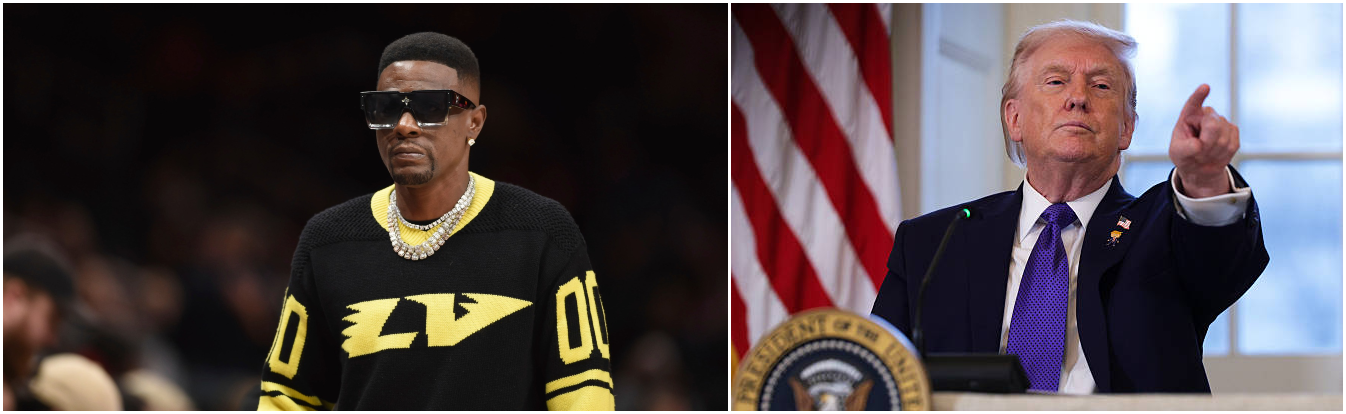
Boosie Badazz Paid $600,000 for a Donald Trump Pardon That Never Came.
(ThyBlackMan.com) In more than a few years of watching how power actually moves in this country, I have seen ambitious men mistake a full bank account for real influence, and the rapper Boosie Badazz has now paid dearly to learn the difference.
The Baton Rouge rapper, whose legal name is Torrence Hatch, handed over six hundred thousand dollars to a couple of Washington operators who swore up and down they could carry a presidential pardon right to Donald Trump’s desk. The paper never showed up. Now Boosie is fighting to claw back half of what he spent, and according to text messages reviewed by NOTUS, the two men he trusted with that money claimed their firm was effectively bankrupt and could not give it back. Their firm disputes that it ever agreed to refund half of the fee.
Sit with that number a minute. Six hundred thousand. That is more than a whole lot of hardworking folks will see across ten years of honest sweat. He put it on the table because he was staring down a federal gun conviction and did not want to see the inside of a cell.
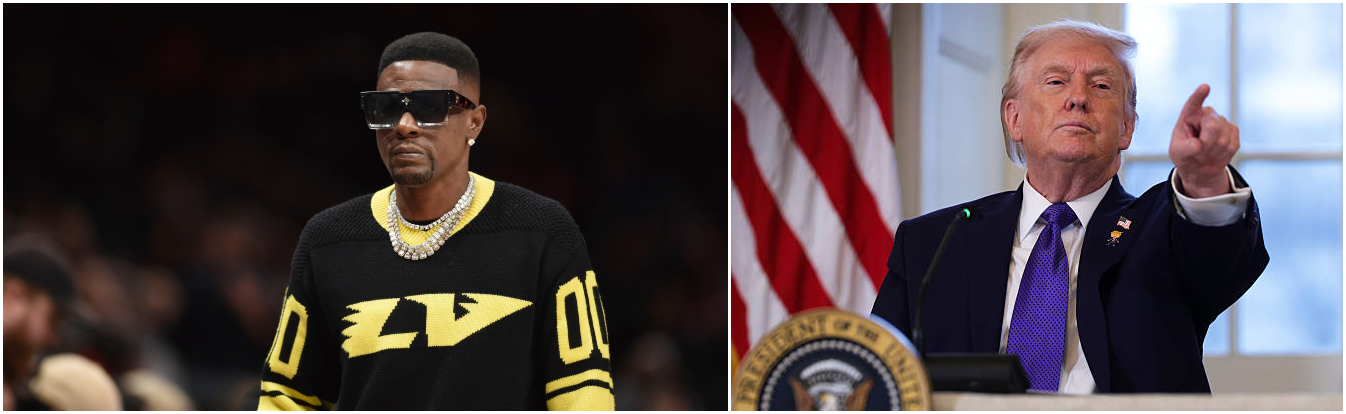
Here is how it went sideways, according to the reporting from NOTUS. Late last September, Jacob Wohl and Jack Burkman, running a shop called JM Burkman and Associates, pitched Boosie hard. He told reporters they talked like they had the president on speed dial. They dropped big names, waved around their so-called connections, and made the man believe a clean slate was practically already signed. On New Year’s Eve, one of them texted that Trump had it “in hand and is ready to sign.” A day later, on New Year’s Day, Boosie’s lawyer got a call saying the deed was done. Trump had supposedly signed the pardon. Time to celebrate.
Except it was not done. When his people checked with the court and the prosecutors, there was nothing. According to Boosie’s lawyer, a White House aide later said officials had not seen a pardon application for him at all. A White House official also told NOTUS that the clemency team had never heard from Wohl or Burkman and warned that their involvement could hurt an applicant’s chances. Boosie’s lawyer later filed a separate application directly with the White House, which acknowledged receiving it and said it was under review.
The kicker is that Boosie avoided additional prison time anyway. A federal judge sentenced him in January to 10 days of time served, three years of supervised release, 300 hours of community service and a $50,000 fine, no thanks to the men he paid. So all that money bought him disputed promises, a pardon that never appeared and a refund fight he is still trying to settle.
Now, before I go further, let me back up for the young folks who never had to think about any of this.
A pardon is an act of mercy from the president. When a man is convicted of a federal crime, the president has the power to forgive the offense, relieve federal punishment and remove certain legal disabilities caused by the conviction. It does not declare the person innocent or erase the conviction from his criminal record. That power sits right there in the Constitution, Article Two, Section Two. The framers borrowed the idea from old England, where kings called it the prerogative of mercy, a custom that goes back more than a thousand years to the seventh century. Alexander Hamilton is the one who argued for putting it in the hands of one man, the president, so somebody could soften the law when justice and cold rules pulled in different directions.
This is not new, and it is not small. George Washington himself used it in 1795 to pardon two men convicted of treason following the Whiskey Rebellion. Gerald Ford used it in 1974 on Richard Nixon, and that decision was so unpopular it may have helped cost Ford the next election. Jimmy Carter granted unconditional pardons to people who violated the Selective Service Act during the Vietnam era, though his action did not cover military deserters. Ronald Reagan forgave the Yankees owner George Steinbrenner. Bill Clinton, on his very last day in the White House, forgave his own brother Roger along with a fugitive financier named Marc Rich, and folks are still arguing about that one to this day. And Barack Obama leaned on the power more than almost anybody, granting 1,715 commutations and 212 pardons. Many of those commutations went to ordinary people buried under harsh federal drug sentences who never had a famous name or a lobbyist working the phones for them. He also commuted the sentence of Chelsea Manning, the soldier who leaked government files. Different presidents, different reasons, but every one of them shows the same thing.
So the office of mercy has a long, heavy history, some of it noble, plenty of it ugly. Presidents have used it to heal a divided nation and they have used it to take care of friends. That is the honest truth of it.
And yes, this president has handed out relief to famous men in the music world. Lil Wayne got a full pardon in Trump’s final days back in 2021. NBA YoungBoy got one in 2025 after federal firearms convictions. It is easy to see how Boosie might have looked at those cases and figured he was next in line if he just spent enough. That right there is where his thinking went crooked.
Because here is the part I want every rich and famous person reading this to burn into memory. Fame and money solve a certain kind of problem. When you have a hit record and a bank account, there is always a manager, a fixer, a lawyer, or an accountant who can make trouble disappear. You throw money at it, and it goes away. That is the world these stars live in, and it teaches them a dangerous lesson: that everything, including a man’s freedom, is for sale to whoever writes the biggest check.
Washington does not run on that arithmetic. Not the honest part of it, anyway. A grant of mercy from the president is not a product on a shelf. It is a personal decision by one man, filtered through a process that no lobbyist can force. You cannot buy it any more than you can buy the sunrise. What you can buy, if you are not careful, is a couple of slick talkers who noticed you were scared and cashed in on it.
And look at who Boosie handed his trust to. These two are not statesmen. They are political operators who pleaded guilty in Ohio over an illegal robocall campaign that targeted Black voters. They later agreed to pay up to $1.25 million in a New York settlement, while the Federal Communications Commission imposed a separate fine of more than $5 million. Let that sink in. A Black man from Louisiana paid six figures to the very same characters who had already been convicted over a scheme targeting Black folks at the ballot box. If that is not a warning wrapped inside a warning, I do not know what is.
Finish story here; Boosie Badazz Paid $600,000 for a Donald Trump Pardon That Never Came.
-

Praise 24/7 Commercial Free
For every Show page the timetable is auomatically generated from the schedule, and you can set automatic carousels of Podcasts, Articles and Charts by simply choosing a category. Curabitur id lacus felis. Sed justo mauris, auctor eget tellus nec, pellentesque varius mauris. Sed eu congue nulla, et tincidunt justo. Aliquam semper faucibus odio id varius. Suspendisse varius laoreet sodales.
close

Post comments (0)