-
 play_arrow
Praise 24/7 NO Today's Best Gospel


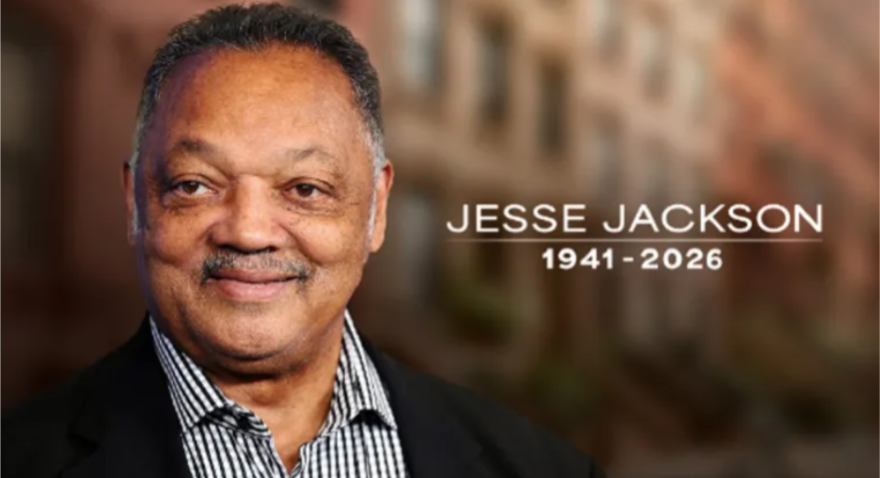
Jesse Jackson Sr. Dies After Lengthy Illness, Civil Rights Icon Was 84.
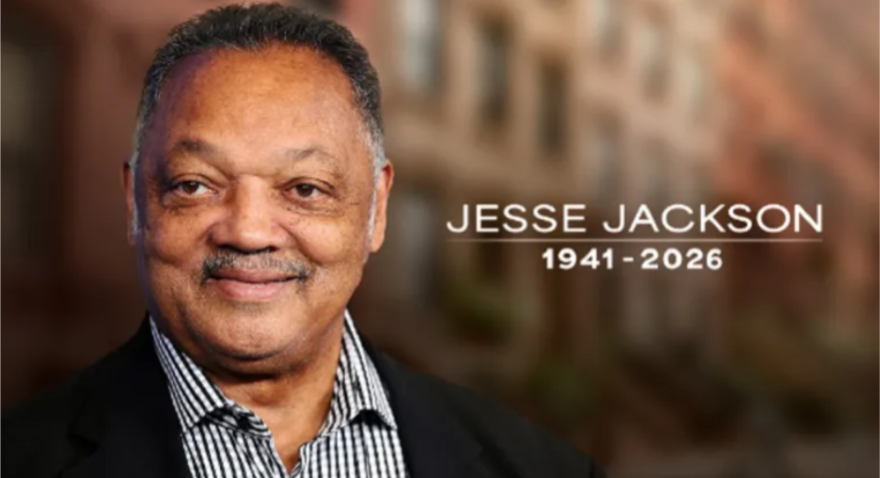
Jesse Jackson Sr. Dies After Lengthy Illness, Civil Rights Icon Was 84.
(ThyBlackMan.com) Some deaths feel distant. Jesse Jackson Sr.’s passing feels personal. It lands like losing an elder you never lived with but somehow grew up around. For a lot of Black folks, especially Black men who came of age watching the civil rights generation grow older on television, Jesse wasn’t just a public figure. Jesse was part of the background of American life. Always somewhere speaking, organizing, pushing, demanding. Even people who disagreed with Jesse Jackson respected the fact that Jesse never stopped moving. There was no retirement from the struggle. No quiet fade into comfort. Jesse Jackson carried the energy of a man who believed the work would outlive the body, so the body better keep up.
Born in 1941 in Greenville, South Carolina, Jesse Jackson entered a country that had already built walls around Black possibility. Segregation wasn’t an idea. It was daily instruction. It told Black children where they could stand, where they could dream, and how small they were expected to live. Growing up in that climate sharpened something inside Jesse instead of shrinking it. The church, the neighborhood, and the elders around him built a foundation that mixed discipline with belief. The Black church in that era wasn’t just about Sunday worship. It was a training ground for survival and leadership. It taught language, rhythm, self control, and the idea that no system gets the final word over your spirit.
College at North Carolina A&T became a turning point. Studying sociology and economics wasn’t just academic curiosity. Jesse Jackson wanted to understand the machinery behind inequality. Those classrooms explained patterns that Black communities were living every day. Why wealth clustered in certain places. Why poverty lingered in others. Why laws changed faster than opportunity. Around the same time came marriage to Jacqueline Davis, a lifelong partnership that grounded a life that would soon become public in a way few families are prepared for. Jesse Jackson always spoke about discipline and responsibility, and those ideas started at home. Being a husband and father wasn’t separate from activism. It was part of the message. A Black family living with intention was its own quiet act of resistance.
Meeting Dr. Martin Luther King Jr. shifted Jesse Jackson from concerned citizen to frontline organizer. Joining King meant stepping into a movement where danger was routine. Arrests were common. Threats were constant. The work demanded stamina. Operation Breadbasket, where King placed Jesse in leadership, focused on economic justice. That assignment opened a wider understanding of power. Civil rights wasn’t only about integration signs coming down. It was about money, hiring, ownership, and leverage. Corporations profiting from Black consumers had to answer for their practices. Jesse Jackson learned to carry moral arguments into boardrooms without softening them. Faith and strategy moved together.
The assassination of King in Memphis in 1968 left a wound that never fully closed. Jesse Jackson was there when history split open. That moment could have paralyzed a generation of leaders. Instead, it forced a question that shaped everything that followed. What happens to the movement when the voice at the center is gone. Operation PUSH emerged as part of that answer. People United to Serve Humanity wasn’t just a name. It was a declaration that protest had to evolve into infrastructure. Education programs, corporate negotiations, voter registration drives, and economic campaigns all flowed through that platform. Some efforts soared. Others stumbled. But PUSH never stood still. The mission was motion.
What made Jesse Jackson impossible to ignore was the voice. Not just the sound, but the rhythm. Language carried music. Audiences didn’t sit passively at rallies. They answered back. The exchange felt communal, like church mixed with strategy session. When Jesse talked about discipline, about hope replacing self destruction, about providence over accident, those words landed because the struggle underneath them was shared. The message wasn’t abstract. It named realities people were already fighting inside their own homes and neighborhoods.
By the late 1970s and early 1980s, Jesse Jackson had moved beyond being seen as only a lieutenant from King’s circle. A new identity was forming in public view. Organizer. Negotiator. National figure. Operation PUSH wasn’t simply reacting to events. It was shaping them. Corporate boycotts forced conversations about hiring. Education programs insisted that Black children deserved expectation, not pity. Jesse spoke constantly about excellence, not as a slogan but as survival strategy. In a country quick to define Black failure, excellence became defiance.
The national spotlight grew brighter, and with it came criticism. Some accused Jesse Jackson of chasing visibility. Others saw visibility as a necessary tool in a media driven age. Black leadership in America has always walked that tightrope. Too quiet and you disappear. Too loud and you become a target. Jesse chose loud. Chose presence. Chose to stand where cameras couldn’t look away. That choice made him polarizing. It also made him effective.
The presidential campaign in 1984 didn’t appear out of thin air. It rose from years of groundwork that said Black political power had to expand beyond local victories. Running for president wasn’t framed as fantasy. It was framed as inevitability delayed too long. The Rainbow Coalition spoke to people who felt forgotten by both major parties. Working class families, farmers, laborers, urban communities, immigrants. The message tied their struggles together without pretending their differences didn’t exist. The campaign traveled like a revival meeting mixed with a town hall. Energy followed it. So did resistance.
Inside Black communities, that campaign felt seismic. Elders who remembered poll taxes and literacy tests watched a Black man stand on debate stages and demand equal footing. Younger generations saw a future widen in real time. Representation isn’t cosmetic. It changes internal architecture. It alters what children imagine when adults ask what they want to become. For many, Jesse Jackson’s run was the first time the White House stopped feeling like forbidden territory.
Even without winning the nomination, the campaign redrew maps. Voter registration surged. Conversations about race and power entered spaces that preferred silence. Four years later, the second campaign proved the first was not symbolic. Jesse Jackson won primaries. Delegates accumulated. Momentum built. The idea that Black leadership belonged only at the margins grew harder to defend.
Controversy never left the picture. It never does when a figure steps that far into public life. Critics pointed to missteps, questioned motives, dissected every sentence. Supporters pointed to results, to doors opened, to energy generated. Both realities existed at the same time. That tension followed Jesse Jackson for decades. A complicated man operating inside a complicated country. But even critics rarely denied the scale of the impact.
By the time the second presidential run took shape in 1988, Jesse Jackson wasn’t an experiment anymore. Jesse was a force the political establishment had to account for whether it liked it or not. The campaign moved with a sharper edge, more organized, more confident, less apologetic about its existence. There was a sense that the country had already been introduced once and now the introduction was over. This was about negotiation. Delegates mattered. Platform language mattered. Representation inside party rooms mattered just as much as speeches in front of crowds.
The Rainbow Coalition matured into something broader than a campaign slogan. It became a working theory about America itself. The idea was simple but disruptive. Poor and working people across race lines shared more economic interests than the political system admitted. Jesse Jackson kept repeating that point until it irritated people who depended on division to maintain power. When a message makes the comfortable uncomfortable, it’s usually because it’s brushing against truth. That campaign forced national conversations about income inequality, trade, labor, and the direction of American industry long before those topics became fashionable in mainstream debate.
For Black voters, the 1988 run felt like a continuation of a promise. Turnout surged in communities that had been written off as politically passive. Local organizers treated the campaign like a training ground. Young volunteers learned logistics, messaging, coalition building. Some of those young volunteers would go on to become politicians, strategists, and organizers in their own right. Movements don’t only measure success by elections won. They measure it by infrastructure created. The second Jackson campaign quietly built infrastructure that lasted long after the ballots were counted.
International activism added another layer to Jesse Jackson’s identity. Domestic politics wasn’t the only arena that demanded attention. South Africa under apartheid stood as a global moral test, and Jesse stepped into that fight openly. Speaking against apartheid wasn’t universally popular in American political circles at the time. Economic ties made people cautious. Jesse Jackson chose clarity over comfort. The same voice that spoke in Chicago neighborhoods spoke to international audiences about dignity and self determination. That consistency built credibility with people who understood that justice doesn’t stop at national borders.
The willingness to engage global issues sometimes placed Jesse in politically dangerous territory. Engagement with Middle East leaders, advocacy for displaced populations, and diplomatic missions that bypassed traditional government channels drew intense criticism. Some accused Jesse Jackson of overstepping. Others saw those moves as extensions of a civil rights philosophy that refused to confine itself to American geography. Whether one agreed with every decision or not, the pattern was clear. Silence was never the chosen option. Presence was.
Back home, Operation PUSH continued evolving. Education initiatives emphasized discipline, study hours, and teacher accountability. The message repeated again and again was that Black children deserved environments built around expectation. That insistence rubbed against stereotypes that framed Black youth as problems instead of potential. Jesse Jackson kept arguing that excellence was not elitist. It was necessary. In a country quick to spotlight Black failure, highlighting Black achievement became part of the counter narrative.
Corporate negotiations remained a central tool. Boycotts weren’t symbolic gestures. They were economic pressure campaigns tied to specific demands about hiring, advertising, and access to contracts. Some corporations resisted. Others adapted. The results varied, but the underlying lesson stuck. Black consumers represented power when organized. That idea filtered into later movements that used similar strategies to influence corporate behavior. Jesse didn’t invent economic activism, but Jesse helped modernize its visibility in a media age.
Public life also meant public scrutiny. Every misstep, every controversy, every internal conflict became headline material. Critics accused Jesse Jackson of ego, of chasing cameras, of stretching himself too thin across too many causes. Supporters countered that large personalities are often required to break through national indifference. Both arguments carried pieces of truth. Leadership at that scale is rarely tidy. What stayed constant was motion. Even under criticism, the work continued. Rallies, negotiations, mediations, speeches. The schedule never softened.
Family life ran parallel to the public storm. Being a husband and father under constant national attention isn’t gentle work. The Jackson household lived inside a spotlight that never fully dimmed. Yet stories from those close to the family often circle back to discipline and presence. Expectations stayed high. Education mattered. Conduct mattered. Jesse Jackson didn’t preach values publicly that weren’t enforced privately. That consistency mattered in a culture eager to accuse Black leadership of hypocrisy.
Through the 1990s and early 2000s, Jesse Jackson occupied a unique role in American public life. Not quite politician. Not only preacher. Not just activist. A hybrid figure who moved between worlds. When labor disputes erupted, Jesse appeared as mediator. When racial crises hit national headlines, cameras turned toward Jesse for interpretation. The voice carried authority earned through decades of visible struggle. Even critics recognized the historical weight behind the presence.
The generational shift in activism began to show during those years. Younger leaders emerged with new language, new strategies, new technologies. Some framed their work as a break from the old guard. Others openly acknowledged standing on ground cleared by earlier fighters. Jesse Jackson represented a bridge between eras. A reminder that the civil rights movement didn’t belong to textbooks. It lived inside evolving forms. Watching that transition unfold required humility. Every movement eventually faces the question of succession. Jesse stayed visible without pretending ownership over the future.
Illness later slowed the physical pace, but symbolic presence didn’t vanish. Seeing Jesse Jackson at public events in later years felt like watching a living archive walk into the room. Memory traveled with him. The era of mass marches, assassinations, and legislative battles wasn’t abstract history when Jesse stood at a podium. It was lived experience still breathing. Younger activists often spoke about the importance of elders not as decoration but as anchors. Jesse embodied that role whether invited to or not.
For Black communities across the country, the continued presence of Jesse Jackson served as reassurance that the fight had lineage. That today’s struggles weren’t isolated bursts of outrage but chapters in a longer story. A story carried by people who refused to disappear quietly. The body ages. The voice changes. But the message survives in repetition. Justice delayed is not justice denied if the demand never stops.
As the years moved forward, Jesse Jackson Sr. became something more than an individual leader. Jesse became a symbol people could measure time against. Entire generations could point to moments in their own lives and connect them to where Jesse Jackson was standing in public life at that same time. The marches, the campaigns, the negotiations, the speeches. For many Black Americans, Jesse was a constant presence in a country that rarely offered stability when it came to racial progress. Victories came. Backlash followed. Laws changed. Systems resisted. Through all of it, Jesse Jackson stayed visible, a reminder that retreat was not an option.
Legacy is a word people throw around easily, but in this case it carries weight. Legacy isn’t just accomplishments written down on paper. Legacy is what stays alive in behavior after the body is gone. You can see Jesse Jackson’s imprint in the way modern movements talk about coalition building. The idea that Black struggle is connected to broader struggles around labor, poverty, immigration, and human rights did not arrive fully formed in the present. That framework was argued, tested, and carried forward by leaders like Jesse. The Rainbow Coalition wasn’t just a campaign tool. It was an early blueprint for the kind of intersectional politics that later generations would refine and rename.
You can also see the legacy in the expectation of Black political participation. There was a time when national campaigns treated Black voters as an afterthought except during election season. Jesse Jackson’s presidential runs forced a recalibration. The numbers were too big to ignore. The organizing too visible. The turnout too significant. Campaign strategies across the country changed because one man insisted that Black political power was not symbolic. It was structural. Every election cycle that seriously courts Black voters is operating inside a space that Jesse helped expand.
The emotional impact of this loss sits deeper than politics. Jesse Jackson Sr. represented endurance. Black communities know the cost of endurance. It’s carried in families that outlived segregation, redlining, mass incarceration, and economic neglect. Watching an elder who fought through those eras pass away feels like watching a library burn quietly. So much lived knowledge tied to one body. Stories that don’t fully fit inside documentaries. Lessons learned in jail cells, church pews, union halls, and city streets. The passing of that generation forces a question onto the living. Who carries the memory forward now.
There is grief in that question, but there is also instruction. Jesse Jackson’s life never argued for hero worship. The work was always collective. Every speech pointed outward. Every campaign depended on volunteers. Every boycott required participation. The message underneath the personality was that movements survive when ordinary people accept responsibility instead of waiting for extraordinary figures to appear. That message feels louder after death. The temptation is to mourn and stop there. The challenge is to mourn and continue.
For Black men in particular, Jesse Jackson carried a complicated but powerful image. A public Black man who spoke unapologetically about discipline, faith, family, and political power at the same time. In a culture that often tries to split those ideas apart, Jesse insisted they belonged together. Strength without moral direction meant little. Faith without action meant less. Watching that example over decades shaped conversations inside barbershops, churches, and living rooms about what leadership should look like. Not perfect. Not polished. But committed.
A devoted husband. A father who demanded excellence. A community activist who refused to shrink. A national figure who absorbed criticism without disappearing. That combination doesn’t come packaged neatly. It comes forged in public pressure. Jesse Jackson Sr. carried that pressure for over half a century. Few people sustain that level of visibility without retreating into comfort or bitterness. What stands out in reflection is persistence. The refusal to accept that the fight had an expiration date.
The Black community has always produced leaders who stand in the gap between what is and what should be. Some get remembered as saints. Others get remembered as troublemakers. The truth usually sits somewhere more human. Jesse Jackson lived in that human space. Ambitious. Flawed. Charismatic. Strategic. Tireless. A man aware of the camera but more aware of the cause. A man who understood that progress attracts enemies as quickly as it attracts praise. Yet the work continued anyway.
There is something uniquely painful about losing figures who carried historical memory in their bodies. The civil rights generation is passing from living presence into archive. Photographs replace handshakes. Recordings replace conversations. For younger generations, Jesse Jackson will increasingly exist as footage, quotes, and chapters in books. For those who watched in real time, the loss feels different. It feels like a chapter closing that can’t be reopened. That sensation brings urgency. Memory has to be spoken aloud while witnesses still remain.
What Jesse Jackson leaves behind is not a finished story. It’s an unfinished assignment. The conditions that fueled the early marches did not vanish. They transformed. Economic inequality still shadows Black neighborhoods. Education gaps still demand attention. Voting rights still require defense. The shape of struggle evolves, but the core question remains familiar. Who gets full access to the promise of America. Jesse spent a lifetime insisting that the answer could not exclude Black people without corrupting the entire project.
That insistence is the heartbeat of the legacy. Not a single campaign. Not a single speech. A lifetime of refusal to accept second class citizenship disguised as progress. The language changed over decades. The message did not. Dignity is nonnegotiable. Participation is mandatory. Hope is a discipline, not a mood. Those ideas outlive the voice that first carried them.
Jesse Jackson Sr. will be missed in a way that doesn’t fade quickly. The absence will echo in moments when the country faces another racial crossroads and instinctively looks around for familiar elders. But absence also clarifies inheritance. The next generation doesn’t receive the comfort of giants standing in front. It receives the responsibility of standing where they stood.
The truest tribute is continuation. Not imitation. Not nostalgia. Continuation. Taking the lessons and applying them to a world Jesse could see coming but would not fully live inside. Every generation translates the struggle into its own language. The foundation remains the same. Organize. Educate. Vote. Demand. Protect dignity at all costs.
Some men leave behind monuments. Jesse Jackson leaves behind motion. A lifetime spent refusing stillness in the face of injustice. That motion doesn’t stop because a body rests. It transfers. It waits for the next set of shoulders willing to carry it forward.
And that is where the grief meets the work. A long road stretches ahead, the same road Jesse walked with stubborn belief that it led somewhere better. The responsibility now belongs to those still standing. Keep moving. Keep pushing. Keep believing that the future is not fixed unless we surrender it.
Jesse Jackson Sr. didn’t surrender. That is the memory that stays.
Staff Writer; L.L. McKenna
Politics explained through the lens of justice and equity. Offering perspective that informs, challenges, and empowers.
One can contact this brother at; LLMcKenna@ThyBlackMan.com.
-

D.K. Smith
For every Show page the timetable is auomatically generated from the schedule, and you can set automatic carousels of Podcasts, Articles and Charts by simply choosing a category. Curabitur id lacus felis. Sed justo mauris, auctor eget tellus nec, pellentesque varius mauris. Sed eu congue nulla, et tincidunt justo. Aliquam semper faucibus odio id varius. Suspendisse varius laoreet sodales.
close Top popular

The Science of Happiness – Exploring Factors for Well-Being

Balancing Act: Prioritizing Your Well-Being in a Busy World

Overcoming Procrastination – Strategies for Productivity and Success

Unlocking Hidden Potential – A Guide to Personal Growth

Mindful Living – Cultivating Presence in the Modern Era

Post comments (0)