-
 play_arrow
Praise 24/7 NO Today's Best Gospel


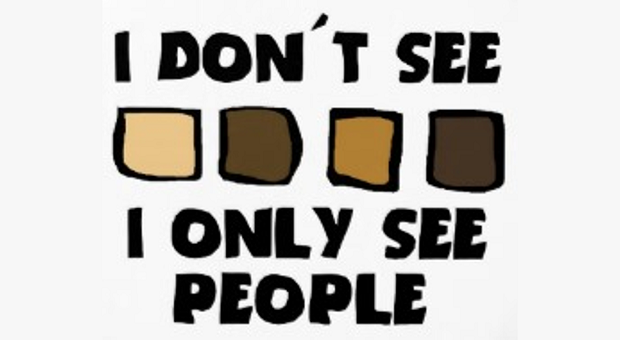
Saying “I Don’t See Color” Sounds Noble – But It May Be Spiritually Wrong.
Saying “I Don’t See Color” Sounds Noble – But It May Be Spiritually Wrong.
(ThyBlackMan.com) When people say to me, “I don’t see color”, I usually ask if they have “seen” an optometrist. Colorblindness is a medical condition. While I believe that most people who utter those words mean well, they’re woefully misguided. In effect, they’re advocating for all of us to pretend that everyone is the same. This was never God’s intent; in fact, God intends the opposite.
Thus, colorblindness is not only a medical problem; it is also a spiritual one. Why? God Himself created color diversity. You cannot believe that God is providential and also believe that color is accidental. (Note: In accordance with the Bible, I refer to God in masculine terms. I understand that not all faith traditions do so.)
Ignoring color runs counter to God’s self-evident intentions. He created humanity and allowed it to evolve into a wonderful spectrum of colors, shapes, sizes, and other attributes. Imagine someone saying, “I don’t see differences in people’s height.” Assuming that the person is sighted, you would wonder whether he or she was mentally stable.
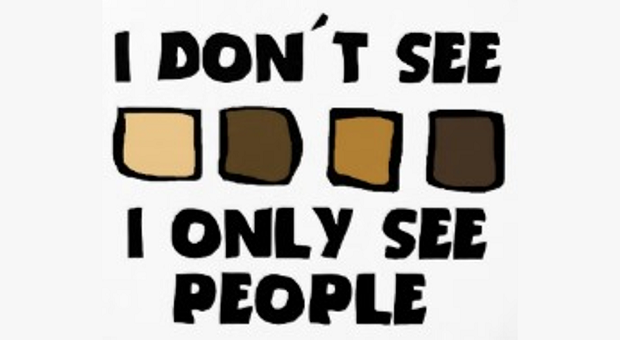
Thus, when someone says, “I don’t see color,” they are (perhaps inadvertently) rebuking God for creating one of the defining characteristics of His divine design. Diversity is a key feature of all life, whether humans, animals, insects or plants. What if there were only one kind of vegetable?
Due to America’s legacy of racial segregation, I grew up in an essentially all-Black family, lived in an essentially all-Black neighborhood, attended essentially all-Black schools, and worshipped in a decidedly all-Black church. Then, when I was in sixth grade, a school desegregation order took effect in my area of town. Consequently, I was bused to the south side of Indianapolis.
That was a transformational experience. For the first time in my life, I was exposed to white people en masse. (Well, other than at the Indiana State Fair.) My life was richer for that experience, despite some extremely difficult racist incidents that my fellow Black students and I endured. I don’t recall a single person in those years saying, “I don’t see color.”
Further, unity in diversity is a central tenet of Christianity. To be genuinely Christ-Centered is to go beyond the lip service that often pervades the church. If Christ is at the center, diversity cannot be on the periphery. Acts 6 presents a biblical example of the spiritual importance of unity in diversity.
In seven verses Luke reveals a perfect example of embracing diversity that marries recognition and reconciliation. There was a religious/cultural dispute among early Christians who had converted from Judaism. The disciples intervened quickly to quell suspected discrimination. They acknowledged that not doing so would have hindered the preaching of the Gospel.
Thus, when people deride the “Social Gospel”, they’re deriding the clear message of Scripture. The truth is that there is no “Social” Gospel; there is only the Gospel. The Euangelion. The Good News.
Jesus admonishes us to love our neighbor in Matthew 22:39. The Greek word that Matthew uses for “neighbor” literally means “anybody other than you”. There is no way around that. This shouldn’t be surprising because of the circumstances surrounding His birth. Jesus was an undocumented immigrant who was born to an unwed teenaged mother. He understood, in the most personal way, what it meant to be an outsider.
And it’s not just Jesus. We often forget that God initiates this commandment in the Old Testament, telling us to love, to welcome, to take care of, and to protect immigrants and foreigners. God does so not once. Not three times. The Old Testament demands this of us more than 35 times!
Finish story here; Saying “I Don’t See Color” Sounds Noble – But It May Be Spiritually Wrong.


-

Praise 24/7 Commercial Free
For every Show page the timetable is auomatically generated from the schedule, and you can set automatic carousels of Podcasts, Articles and Charts by simply choosing a category. Curabitur id lacus felis. Sed justo mauris, auctor eget tellus nec, pellentesque varius mauris. Sed eu congue nulla, et tincidunt justo. Aliquam semper faucibus odio id varius. Suspendisse varius laoreet sodales.
close Top popular

The Science of Happiness – Exploring Factors for Well-Being

Balancing Act: Prioritizing Your Well-Being in a Busy World

Overcoming Procrastination – Strategies for Productivity and Success

Unlocking Hidden Potential – A Guide to Personal Growth

Mindful Living – Cultivating Presence in the Modern Era

Post comments (0)