-
 play_arrow
Praise 24/7 NO Today's Best Gospel


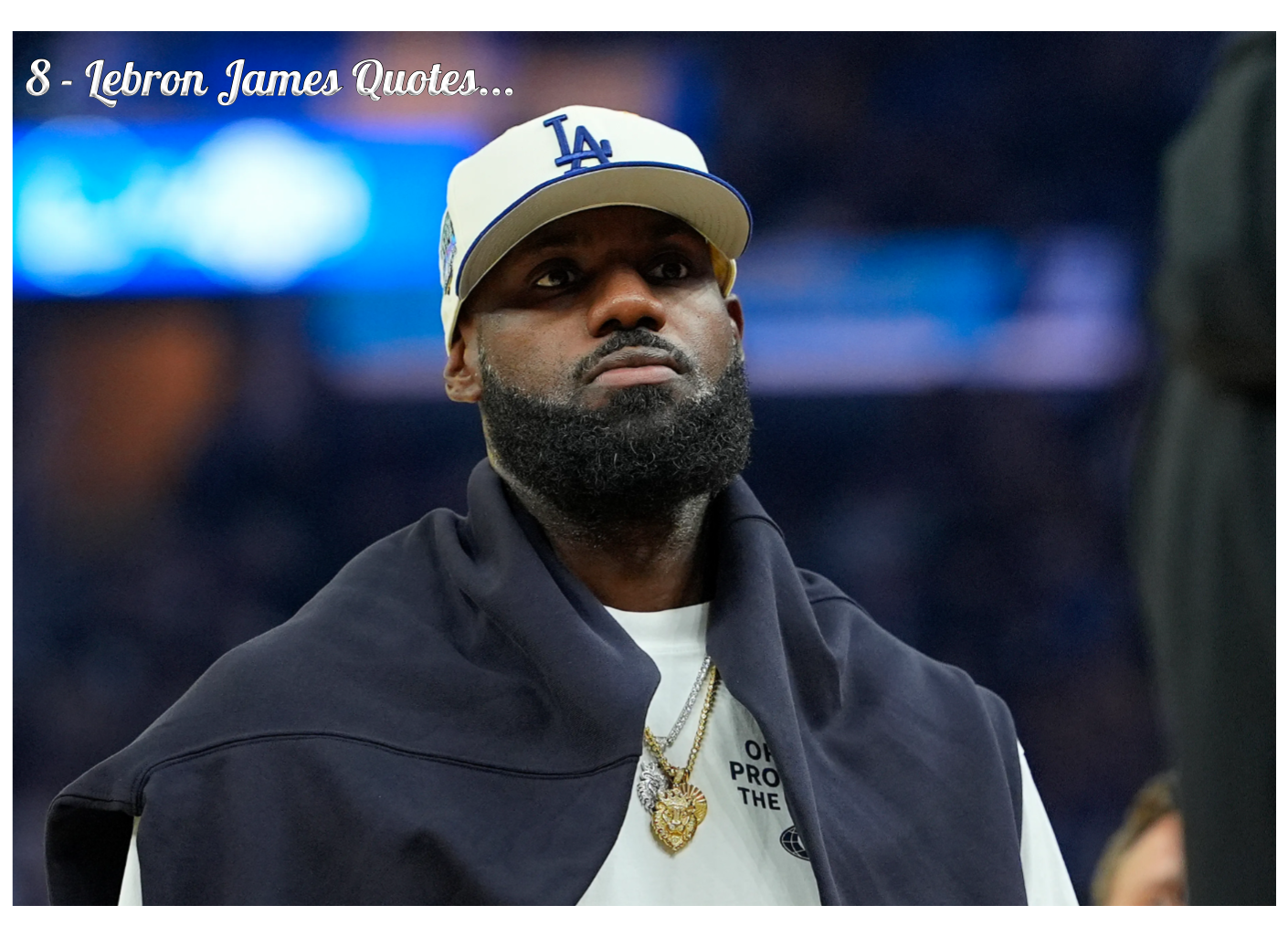
8 LeBron James Quotes on Fame, Failure, and Purpose.
8 LeBron James Quotes on Fame, Failure, and Purpose.
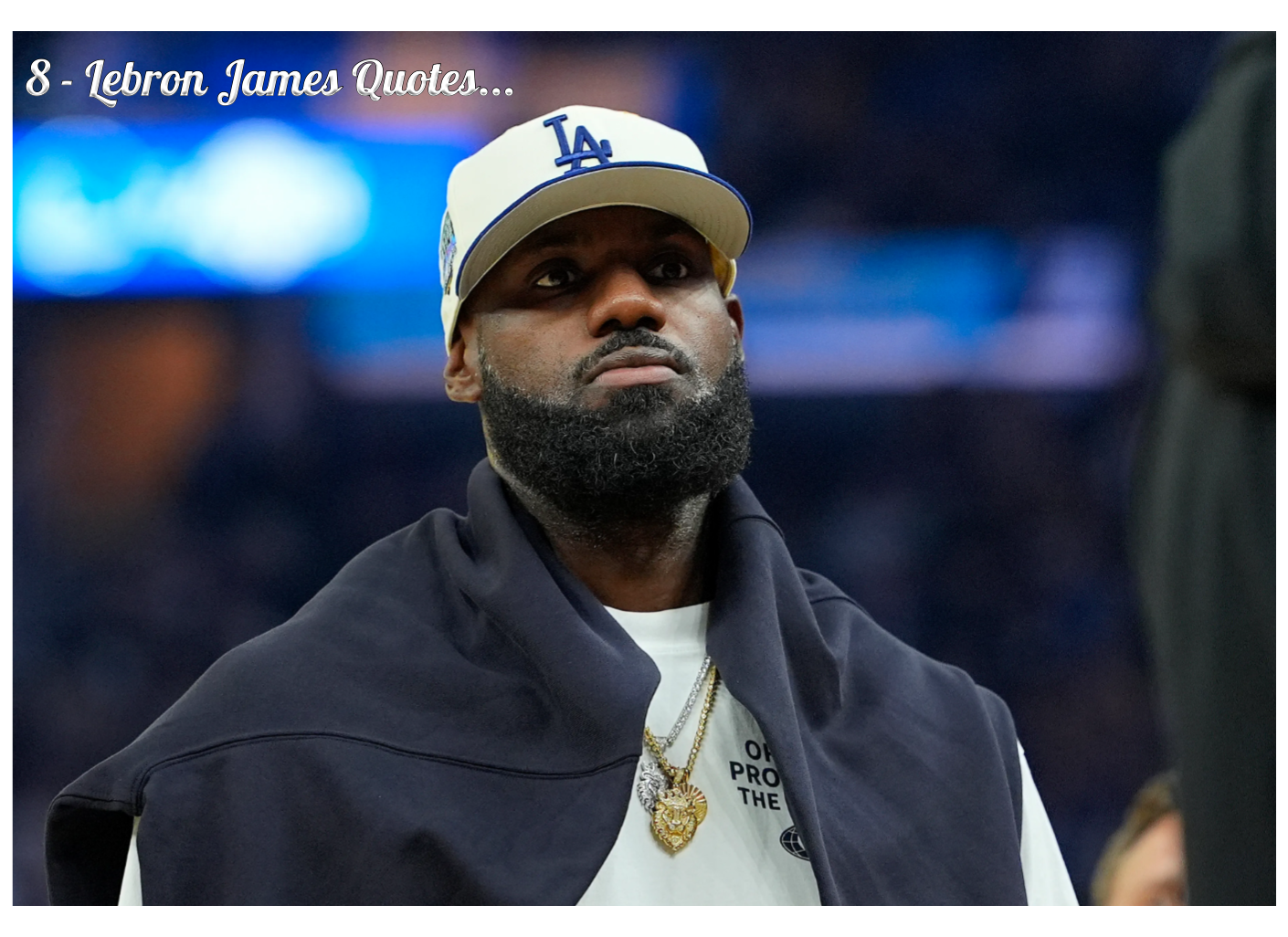
(ThyBlackMan.com) When people talk about LeBron James, the conversation usually starts with points, championships, longevity, or debates about where he ranks all time. That is understandable, but it is also incomplete. LeBron is more than a basketball player. He is a product of a particular American moment, a particular Black experience, and a long historical line of public figures who had to grow up fast while the whole world watched. His quotes matter because they reveal how he understands himself inside that pressure.
What makes LeBron interesting from a historical standpoint is not that he is perfect, but that he is aware. He speaks like someone who knows where he came from, who understands what could have happened instead, and who recognizes how fragile success can be. These eight quotes are not just motivational lines. They are reflections shaped by history, community, faith, failure, and responsibility. Let’s walk through them together.
1. “I never get too high on my stardom or what I can do.”
This quote sounds simple on the surface, but it carries serious historical weight once you slow down and sit with it. For Black figures in America, stardom has rarely meant comfort or safety. Fame can lift you up in one season and turn you into a target the next. LeBron understands this instinctively, even if he does not always spell it out. His refusal to get carried away by praise reflects a survival mindset that has been passed down quietly through generations.
If you look back at Black athletes and entertainers before him, many learned the hard way that applause does not equal protection. Public favor shifts quickly, and confidence is often misread as arrogance. Being celebrated one day does not prevent you from being criticized, questioned, or diminished the next. LeBron’s humility is not insecurity or false modesty. It is awareness shaped by history. He knows that skill can open doors, but it can also invite scrutiny that has nothing to do with performance.
There is also something deeply grounding in how he separates who he is from what he does. Stardom becomes something external rather than internal. That distinction matters, especially in a culture that encourages people to merge identity with visibility and numbers. When people tie their self worth to attention, praise becomes addictive and criticism becomes devastating. LeBron refuses to let his sense of self rise and fall with public opinion.
In a world where hype is constant and ego is rewarded, this mindset feels steady and grown. It is the kind of thinking that allows someone to last, not just shine briefly. Historically, the figures who endured understood this balance well. They knew that believing too much of your own hype could be just as dangerous as believing none of it.
2. “But sports carried me away from being in a gang, or being associated with drugs. Sports was my way out.”
This quote cuts straight to reality without dressing anything up. LeBron is not romanticizing struggle, and he is not pretending his path was typical or guaranteed. He is being honest about the limited exits available to many Black kids growing up in under resourced neighborhoods. Sports did not save everyone, but for him, it opened a door that otherwise might not have existed.
Historically, sports and entertainment have often functioned as narrow escape routes rather than dreams freely chosen. That reality can be uncomfortable to acknowledge, but it is true. When educational, economic, and social opportunities are restricted, people gravitate toward what feels visible and possible. LeBron’s quote acknowledges that truth without shame or exaggeration. He does not make sports sound magical. He makes them sound necessary.
What stands out most is that he does not frame this as moral superiority. He does not suggest that choosing sports made him better than those who did not find an exit. Instead, he recognizes how close the margins were and how easily things could have gone another direction. That awareness keeps his story grounded and prevents it from becoming a lecture.
This honesty matters because it pushes back against the myth that success is purely about willpower. LeBron’s experience fits into a larger historical pattern where talent meets circumstance. His words remind us that access, timing, mentorship, and support often make the difference between potential being realized or lost.
3. “I need music. It’s like my heartbeat, so to speak. It keeps me going no matter what’s going on, bad games, press, whatever.”
Music has always been more than background noise in Black life. It has been therapy, language, memory, and refuge all at once. When LeBron talks about music this way, he is tapping into something deeply historical. Music has helped people carry burdens long before sports contracts, social media, or press conferences existed.
For someone under constant observation, music becomes a private space that cannot be interrupted. It allows emotion to move without explanation. It regulates stress, restores balance, and creates moments of quiet when the outside world feels loud. LeBron’s reliance on music reflects how many Black creatives, workers, and public figures have used sound to stay centered when pressure feels nonstop.
There is also something generational in this connection. LeBron grew up alongside hip hop’s rise as both cultural expression and emotional documentation. Music became a way to process life, not escape it. It narrated joy, frustration, ambition, and loss. His quote shows that even at the highest level of success, that need for musical grounding does not disappear.
What this really tells us is that greatness still requires refuge. No amount of fame replaces the need for something that speaks directly to your spirit. Historically, music has always filled that role, and LeBron’s words confirm that it continues to do so, even for those who seem to have everything.
4. “You know, God gave me a gift to do other things besides play the game of basketball.”
This quote reflects a faith rooted in responsibility rather than entitlement. In many Black communities, talent has long been framed as something borrowed, not owned. LeBron’s words echo that tradition. Ability is not just something to enjoy. It is something to steward.
Historically, faith helped Black Americans make sense of gifts in a world that often tried to restrict how those gifts could be used. Belief offered perspective when society tried to define people narrowly. LeBron’s understanding allows him to see himself as more than an athlete, even when the industry might prefer he remain in that lane.
This mindset also explains why he has consistently pushed beyond basketball. Whether people agree with every move or not, his sense of purpose has never been limited to the court. He believes growth, curiosity, and expansion are part of honoring what he has been given, not distractions from it.
In a broader sense, this quote reminds us that identity does not have to be singular. LeBron refuses to reduce himself to one role, one skill, or one season. History shows that the figures who leave lasting impact are usually the ones who understood they were more than what the world first celebrated them for.
5. “As a professional athlete a lot is going to be said about you, but I just try to move forward and try to achieve my goals.”
Public noise has always followed visibility, especially when success places someone in constant view. Commentary, criticism, speculation, and judgment come with the territory. LeBron’s quote acknowledges this reality without sounding defensive or bitter. He understands that attention is unavoidable, but distraction is optional, and that distinction usually comes with experience.
Many before him learned that responding to every critique drained energy better spent building something lasting. Whether in sports, music, or leadership, the pattern is the same. Public conversation often says more about the audience than the person being discussed. LeBron’s focus on forward motion reflects that understanding. Progress requires selective listening, not emotional detachment, but discernment.
There is maturity in accepting that not all opinions deserve a response. LeBron’s approach shows discipline rather than avoidance. He does not deny criticism exists, but he refuses to let it steer his direction. Movement, growth, and consistency become his answer instead of argument.
This mindset has allowed him to remain steady over long stretches of time. The people who endure are usually the ones who keep going despite the noise, not those who get pulled into endless back and forth. LeBron’s words remind us that momentum often matters more than rebuttal.
6. “There are always people always asking you for something. But I feel like I have a foundation. I have a supporting cast where it doesn’t bother me too much.”
Success brings expectations, especially for Black figures who break through barriers. Communities often look to those who make it as symbols, solutions, or safety nets. LeBron’s quote recognizes that pressure without resentment. He does not deny the weight of it, but he makes clear that preparation determines how that weight is carried.
The key word here is foundation. People who endure public pressure rarely do it alone. They are anchored by family, mentors, and trusted circles who help them stay grounded when demands increase. LeBron understands that success without structure can quickly become overwhelming.
His mention of a supporting cast highlights balance rather than obligation. He is not surrounded by people who only take. He is surrounded by people who stabilize him, challenge him, and remind him who he is beyond achievement. Because of that, requests and expectations do not shake him as much.
This quote quietly teaches an important lesson about endurance. Stability does not come from avoiding responsibility or shutting people out. It comes from being rooted deeply enough to handle what comes with success without losing yourself in the process.
Finish story here; 8 LeBron James Quotes on Fame, Failure, and Purpose.

-

Praise 24/7 Commercial Free
For every Show page the timetable is auomatically generated from the schedule, and you can set automatic carousels of Podcasts, Articles and Charts by simply choosing a category. Curabitur id lacus felis. Sed justo mauris, auctor eget tellus nec, pellentesque varius mauris. Sed eu congue nulla, et tincidunt justo. Aliquam semper faucibus odio id varius. Suspendisse varius laoreet sodales.
close Top popular

The Science of Happiness – Exploring Factors for Well-Being

Balancing Act: Prioritizing Your Well-Being in a Busy World

Overcoming Procrastination – Strategies for Productivity and Success

Unlocking Hidden Potential – A Guide to Personal Growth

Mindful Living – Cultivating Presence in the Modern Era

Post comments (0)