-
 play_arrow
Praise 24/7 NO Today's Best Gospel


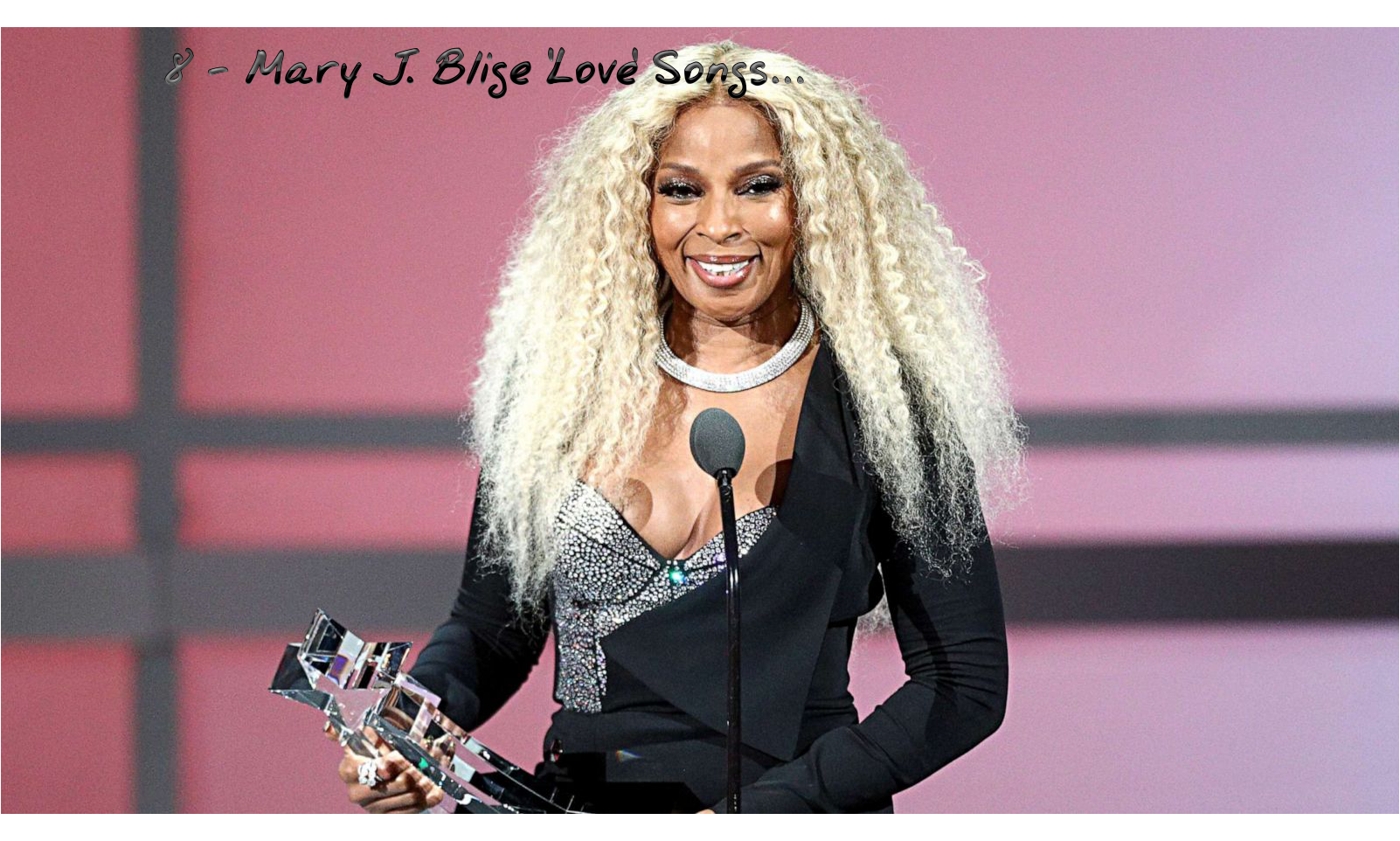
8 Mary J. Blige Love Songs That Defined a Generation of R and B.

8 Mary J. Blige Love Songs That Defined a Generation of R and B.
(ThyBlackMan.com) When it comes to singing about love, very few artists have ever done it as honestly as Mary J. Blige. From the moment her voice hit the airwaves in the early nineties, it was clear she was not interested in fairy tales. Mary sang about love the way people actually experience it. With hope, pain, passion, doubt, forgiveness, and growth all living in the same space.
Mary J. Blige has never separated love from life. Her songs understood that romance does not exist in a vacuum. Bills, trust issues, self worth, trauma, and healing all show up in relationships, and Mary gave those realities a voice. That honesty is why her love songs still connect across generations. They feel lived in, not imagined.
What makes Mary J. special is that even at her most vulnerable, she never sounds weak. There is strength in her voice even when she is hurting. There is dignity even when she is breaking down. That balance is rare, and it is the reason her love songs still feel necessary.
These eight songs represent different chapters of Mary J. Blige’s relationship with love. Together, they tell a story that continues to resonate because love itself has not changed. The feelings are the same. Only the times are different.
1. Be Without You
Be Without You is not just a love song. It is a survival song, and that distinction matters. When Mary J. Blige sings this record, she is not talking about romance in a vacuum or love that exists only when conditions are perfect. She is talking about choosing love when life applies pressure from every direction. This is a song born from experience, not imagination.
Mary’s delivery carries a weight that comes from having been through storms. She does not sound hopeful in a fragile way. She sounds resolved. There is strength in her voice, but it is not hardened. It is the strength of someone who has already seen what happens when things fall apart and still decides to stay. That emotional authority cannot be manufactured in a studio.
What makes the performance so powerful is how controlled it is. Mary does not oversing or chase dramatic moments. She stays grounded, allowing conviction to do the work. You hear it in the way she leans into certain lines and holds back on others. She knows exactly what the song is saying, and she trusts the listener to feel it without being pushed.
The production mirrors that emotional steadiness. The beat never panics. It stays consistent, almost like a heartbeat, reinforcing the idea that love can be an anchor. Mary’s voice sits comfortably inside the music, not fighting it, not floating above it. Everything feels locked in place.
Listening now, Be Without You still resonates because the pressures it speaks to have not changed. Money problems, emotional distance, personal growth, outside noise, and internal doubt still test relationships every day. Mary reminds us that real love is not proven during highlight moments. It is proven when things are heavy, when staying becomes a conscious choice rather than a romantic impulse.
2. I’m Goin’ Down
I’m Goin’ Down feels like a private moment that somehow became public. It is the sound of someone realizing they are losing a relationship while still holding onto it emotionally. Mary captures that space with painful accuracy. This is not a song about screaming or confrontation. It is about the quiet devastation that happens when love fades slowly.
Her vocal performance is one of restraint and control. Mary does not push her voice to express pain. She lets it settle into the cracks. You hear it in the pauses, in the way she slightly pulls back from certain notes, as if she is protecting herself even while being vulnerable. That restraint makes the emotion feel raw rather than theatrical.
There is something deeply human about how she sings this song. It does not feel like a performance meant to impress. It feels like someone talking to themselves late at night, replaying moments and wondering where things went wrong. The pain is present, but it is quiet, internal, and unresolved.
The production leans into classic soul in a way that feels timeless rather than dated. The tempo is slow, deliberate, and heavy with feeling. The music does not distract from the emotion. It forces you to sit with it. There is no escape route built into the song.
This record still resonates because unbalanced love never stops existing. People still give more than they receive. People still stay longer than they should because of history, hope, or fear. Mary gives voice to that experience without self pity and without blame. She simply lets the truth exist.
3. Love No Limit
Love No Limit marked an important moment in Mary J. Blige’s catalog. It showed a woman comfortable in her desire and unapologetic about intimacy. This was Mary stepping into sensuality without shame, without explanation, and without softening herself to make others comfortable.
Her voice here is smooth, assured, and fully present. She does not sound tentative or exploratory. She sounds settled. There is confidence in her tone that comes from self acceptance. She knows what she wants, and she is not asking permission to express it.
What makes the song powerful is how relaxed it feels. The groove moves slowly and deliberately, creating a space rather than a destination. The production allows the song to unfold naturally, never rushing the moment. It feels like intimacy that develops over time, not something forced or scripted.
Mary’s delivery stays consistent throughout, never breaking character or tone. She understands that intimacy does not need volume. It needs comfort. Her voice glides instead of pushes, reinforcing trust rather than urgency.
Listening now, Love No Limit still works because grown love still looks like this. Comfortable. Honest. Mutual. It reminds listeners that intimacy is not about performance or spectacle. It is about presence. Mary understood that long before many artists dared to sing it out loud.
4. My Love
My Love feels like a quiet conversation between two people who already know each other deeply. There is no urgency here, no need to explain feelings or prove devotion. The song exists in that space where love is understood rather than announced.
Mary sings with tenderness and restraint, choosing clarity over power. She does not belt or reach for emotional peaks. Instead, she allows softness to carry the message. Her voice feels close, almost conversational, like something meant to be heard by one person rather than an audience.
The beauty of this song lies in its simplicity. The arrangement stays minimal, giving Mary room to exist inside the emotion. Nothing competes with her voice. Every musical choice feels supportive, as if the production knows its role is to hold the moment steady.
There is a maturity in how the song unfolds. It does not build toward a dramatic climax. It stays level, calm, and emotionally consistent. That choice reflects a love that has moved past uncertainty into understanding.
This song still fits perfectly into quiet listening moments. Late nights, early mornings, reflective spaces, and emotional pauses. My Love reminds listeners that intimacy does not always raise its voice. Sometimes it whispers, and that whisper carries more weight than any declaration ever could.
5. Everything
Everything feels like an exhale. This is Mary J. Blige singing from a place she worked hard to reach. There is no desperation in this song, no bargaining with love, no emotional tug of war. It comes from appreciation rather than pursuit. Mary sounds like a woman who has been through enough to recognize peace when it shows up.
Her vocal performance reflects that calm assurance. She is not trying to convince anyone of what she feels. She simply states it. There is ease in her phrasing, a looseness that comes from emotional security. You hear it in how she lets certain lines stretch naturally, trusting the feeling instead of pushing it forward.
The production mirrors that sense of safety. The groove moves at a comfortable pace, never rushing the moment or demanding attention. It wraps around Mary’s voice rather than competing with it. Every instrument feels like it knows its place, reinforcing the idea that love, when right, does not feel chaotic.
What makes Everything special is its maturity. This is not the sound of someone discovering love for the first time. It is the sound of someone who knows what love costs and still chooses it because it feels right. Mary gives voice to a kind of love many people want but rarely articulate. Love that feels steady. Love that does not require survival mode.
6. Share My World
Share My World unfolds like an open door. There is no urgency in this song, no pressure to perform or prove anything. Mary approaches love here as an invitation, not a demand. The song exists in that vulnerable space where trust matters more than words.
Her vocal delivery is soft and reassuring, almost conversational. She does not sound like she is asking to be loved. She sounds ready to let someone in. That distinction gives the song its emotional power. Vulnerability is presented as choice, not weakness.
The atmosphere created by the production feels warm and intimate. It carries the texture of a late night conversation when defenses drop naturally. The music does not crowd the moment. It leaves room for honesty to breathe.
Share My World speaks to the part of love that requires courage. Opening yourself emotionally always carries risk, and Mary does not pretend otherwise. Instead, she frames openness as an act of strength. That perspective gives the song lasting emotional weight.
7. You Bring Me Joy
You Bring Me Joy shows a lighter side of Mary J. Blige without abandoning emotional depth. This is happiness expressed without naivety. It is joy that has been earned, not stumbled into. Mary sounds like someone who knows the difference between temporary excitement and real emotional uplift.
Her vocal performance carries warmth and sincerity. There is brightness in her tone, but it is grounded. She does not oversell the emotion or exaggerate the feeling. She allows joy to exist naturally, without apology or explanation.
The rhythm adds bounce and movement, giving the song an uplifting energy that feels organic rather than forced. It invites motion, smiles, and ease. Yet beneath that lightness is an understanding of what it took to arrive here emotionally.
This song matters because it reminds listeners that joy is not shallow. It can be a sign of healing. Mary presents happiness as something transformative, something that changes how you carry yourself and how you love. That message remains deeply relevant.
8. Not Gon’ Cry
Not Gon’ Cry is often remembered as a breakup song, but at its core, it is a song about reclaiming self worth. Mary does not dramatize the end of love here. She faces it with clarity and resolve. The heartbreak is present, but it does not consume her.
Her vocal performance balances pain with restraint. She allows emotion to surface without letting it spiral. There is strength in how she holds herself vocally, refusing to collapse under the weight of disappointment. That control makes the song powerful.
The production stays minimal and respectful, understanding that this moment belongs to Mary’s voice. Nothing intrudes. Nothing distracts. The space around her singing feels intentional, giving her room to stand firm in her decision.
Not Gon’ Cry speaks to anyone who has had to choose themselves after loving deeply. It acknowledges loss without glorifying suffering. Mary reminds listeners that loving someone does not mean abandoning your dignity. Sometimes, the strongest act of love is walking away intact.
Mary J. Blige’s love songs have never existed to entertain alone. They exist to accompany people through real emotional seasons. Through heartbreak, healing, growth, and finally peace. Her voice has always sounded like someone who understands what love costs and what it gives back when it is honest.
What makes these songs endure is not nostalgia or production. It is truth. Mary never separated love from self worth. Even at her most vulnerable, she remained grounded in who she was becoming. Her music allowed listeners to feel deeply without feeling lost.
These records age alongside the people who carry them. They sound different at twenty than they do at forty. They hit harder when you have lived a little and learned what love demands. That evolution is built into her catalog.
Mary J. Blige did not just sing about love. She documented it. The pain, the patience, the joy, and the clarity that eventually arrives. And that is why her love songs continue to matter. They do not fade with time. They grow with you.
Staff Writer; Jamar Jackson


-

Praise 24/7 Commercial Free
For every Show page the timetable is auomatically generated from the schedule, and you can set automatic carousels of Podcasts, Articles and Charts by simply choosing a category. Curabitur id lacus felis. Sed justo mauris, auctor eget tellus nec, pellentesque varius mauris. Sed eu congue nulla, et tincidunt justo. Aliquam semper faucibus odio id varius. Suspendisse varius laoreet sodales.
close Top popular

The Science of Happiness – Exploring Factors for Well-Being

Balancing Act: Prioritizing Your Well-Being in a Busy World

Overcoming Procrastination – Strategies for Productivity and Success

Unlocking Hidden Potential – A Guide to Personal Growth

Mindful Living – Cultivating Presence in the Modern Era

Post comments (0)