-
 play_arrow
Praise 24/7 NO Today's Best Gospel


Desktop 3D Scanning Hits a Price Point Small Workshops Can Finally Justify in 2026.
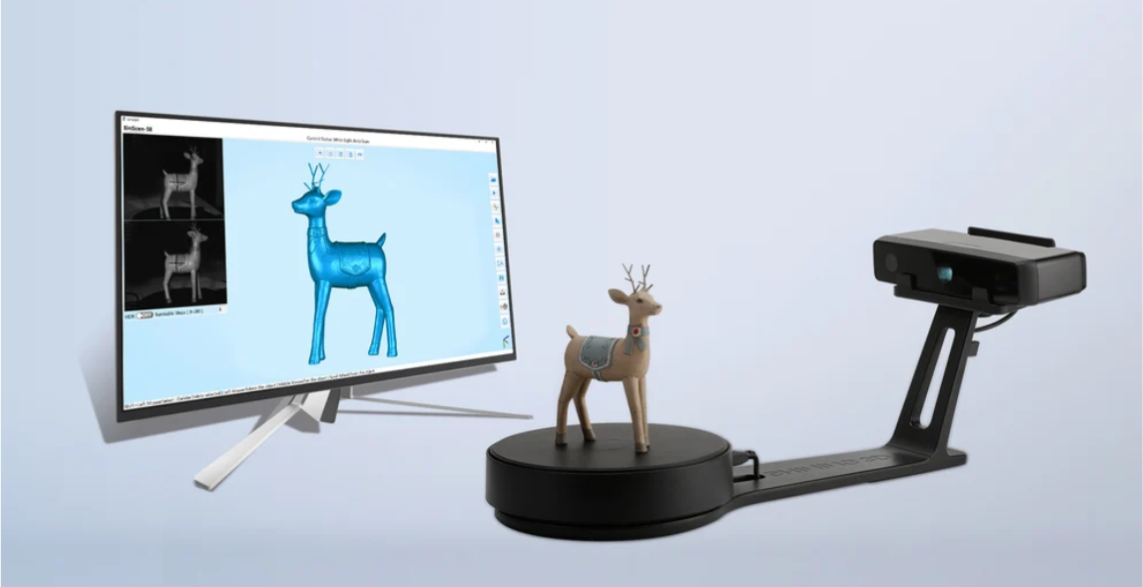
Desktop 3D Scanning Hits a Price Point Small Workshops Can Finally Justify in 2026.
(ThyBlackMan.com) Desktop 3D scanning now fits the budgets of many small fabrication shops, repair businesses, schools, and independent makers. The purchase decision depends on matching a scanner to regular work rather than owning advanced equipment.
Current listings include entry-level desktop models below $1,000, while capable handheld systems remain available below $2,000. That range gives smaller workshops practical choices without requiring industrial equipment, beginning with the buying factors that shape daily use.
The Entry Price Has Changed
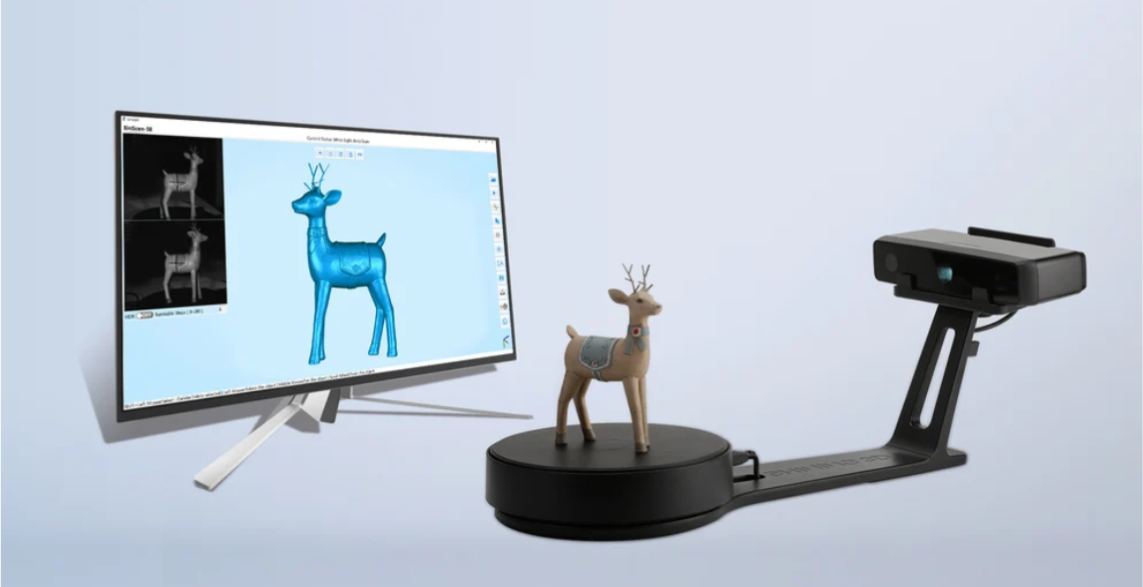
A workshop reviewing 3D scanners for sale online can compare several price levels within one category. The inspected collection lists 11 products, including the Afinia EinScan-SE V2 at $859 and the Afinia Einstar 2 Handheld 3D Scanner at $1,249. Those prices put digital measurement within reach for shops that previously relied on manual gauges, photographs, or outside scanning services.
The collection also lists the Matter and Form THREE 3D Scanner at a sale price of $1,999, reduced from $2,399. The Afinia Einstar VEGA Wireless Handheld 3D Scanner carries the same $1,999 price. These figures create a middle ground for businesses that need more flexibility than a basic desktop unit provides.
Cost Needs A Workload Behind It
Price alone does not determine whether a scanner makes financial sense. A workshop needs to assess how often it will capture parts, how large those parts are, and whether scans will support inspection, reproduction, or design work.
A shop that scans a few replacement components each month should calculate outside service costs, including shipping, waiting time, and revisions. A scanner priced at $859 or $1,249 becomes easier to justify when those expenses recur throughout the year.
Frequent scanning changes the calculation. A handheld unit lets an operator move around a part instead of positioning every object on a desktop surface. That difference matters for repair work, custom fabrication, and components that do not fit comfortably within a small scanning area.
Desktop and Handheld Models Serve Different Tasks
The Afinia EinScan-SE V2 suits buyers who need a lower-cost desktop starting point. A desktop setup gives the operator a fixed scanning position and a consistent workspace. That arrangement supports small objects, repeatable capture routines, and training in a controlled environment.
Handheld models support a different workflow. The Afinia Einstar 2, Afinia Einstar Rockit, and Afinia Einstar VEGA Wireless 3D scanners appear in the inspected collection at $1,249, $1,899, and $1,999. Wireless operation and handheld movement suit larger objects or parts that require scanning from several angles.
A workshop should choose the format that matches its objects instead of paying for mobility that rarely matters. A fixed station suits small, repeatable parts. A handheld scanner makes more sense when an operator must move around the subject.
Higher Prices Need A Clear Reason
The collection lists the 3DeVOK MQ Full Color Compact 3D Scanner at $2,199 and the Afinia EinScan H2 Hybrid LED & Infrared Light Source Handheld 3D Scanner at $5,299. The 3DeVOK MT Gen2 Professional-Grade 3D Scanner costs $8,299, while the Afinia Einscan Libre All-in-One Wireless Handheld 3D Scanner costs $25,999.
Those prices require a separate purchasing discussion. A small workshop should connect the added cost to a defined requirement, such as higher throughput, a particular capture method, or a larger range of parts. Without that requirement, a lower-priced scanner can leave more budget for software, training, fixtures, or replacement accessories.
The collection also lists the BUNDLE 3DeVOK MT Gen2 + Free Wireless Handle for $8,299. Buyers should compare that bundle with the standalone listing and confirm which accessories the daily workflow requires.
A Practical Payback Test
A simple payback review keeps the purchase grounded. First, record the monthly cost of outsourced scanning, including shipping and correction work. Then estimate how many jobs the shop would bring in-house after buying a scanner.
The calculation should include operator time and necessary training. It should also account for preparing scans for measurement, editing, reverse engineering, or 3D printing. A low purchase price does not guarantee a low operating cost when the workflow requires extensive manual cleanup.
A shop should test one representative part before choosing a model. The part should reflect normal size, surface detail, and handling conditions. That test shows whether a scanner fits the actual work better than a feature list.
Conclusion
Desktop 3D scanning now gives small workshops a credible purchase path below $2,000, with entry-level choices starting at $859 in the inspected collection. The right decision depends on part size, scan frequency, operator time, and outside service costs.
A practical next step is to document three recent scanning jobs, compare their total external cost, and match those requirements against desktop and handheld models before setting a purchase budget.
Staff Writer; Lou Brown


-

Praise 24/7 Commercial Free
For every Show page the timetable is auomatically generated from the schedule, and you can set automatic carousels of Podcasts, Articles and Charts by simply choosing a category. Curabitur id lacus felis. Sed justo mauris, auctor eget tellus nec, pellentesque varius mauris. Sed eu congue nulla, et tincidunt justo. Aliquam semper faucibus odio id varius. Suspendisse varius laoreet sodales.
close

Post comments (0)