-
 play_arrow
Praise 24/7 NO Today's Best Gospel


Gary, Indiana’s Power Outage Is a Warning for Black Communities Across America.
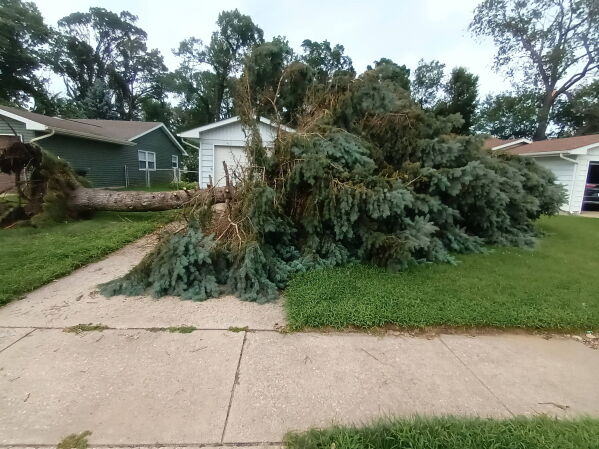
Gary, Indiana’s Power Outage Is a Warning for Black Communities Across America.
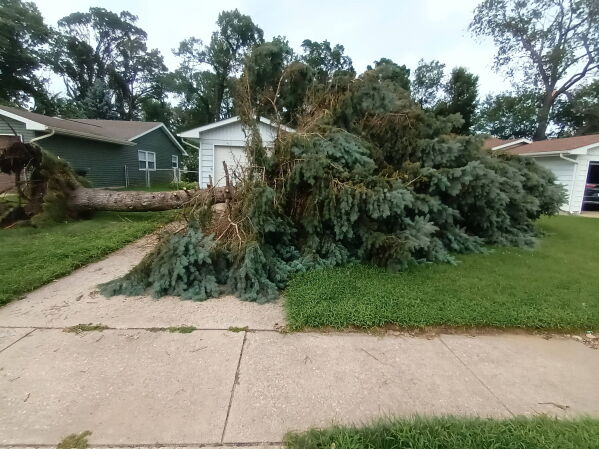
(ThyBlackMan.com) Come the eleventh of August, Gary lost power, and for thousands of households the lights still had not flickered back on more than a week down the line. A derecho came barreling through Northwest Indiana that night. Winds got up near 100 miles an hour, and they snapped utility poles and dumped century old trees onto people’s roofs. Seven people died across Indiana as the storms and flooding unfolded. More than 301,000 NIPSCO customers went dark, better than 60% of the utility’s electric customer base, during what the company described as the most severe storm event in its recent history. Many customers regained service within days. Thousands in this steel town, though, sat in the heat and the quiet, waiting on crews confronting some of the worst damage in the region.
Understand something plainly. This is bigger than weather. When the grid dies for a couple of hours, you grumble and light a candle. Let it stay dead for ten, twelve, fourteen days, and the whole architecture of ordinary life begins to buckle. Refrigerated insulin spoils. Oxygen machines fall silent. Food in the freezer turns well ahead of the check clearing. A working phone becomes a luxury, so folks sit in idling cars just to keep a charge alive. One woman told reporters she was caring for a paralyzed son in a home with no cooling and no internet, powering her dying phone from the dashboard because that was all she had left. She still found grace in it, saying joy comes in the morning. A mobile pantry at a local academy fed roughly 150 souls and ran completely dry, sending the rest down the road to another site. Some governments in the area said their emergency food supplies had been stretched to the breaking point.
That is what a blackout truly is. Not an inconvenience. Electricity, in a modern American city, is food and medicine and cool air and the ability to clock in and earn a living. Take it away long enough and you are not testing patience anymore. You are testing survival.
The scale of the damage tells the story. Repair crews were not simply flipping switches back on. In hard hit pockets they were rebuilding sections of the electrical system, dealing with repairs or replacement involving roughly 300 distribution poles and another 44 transmission poles in Gary. Emergency restoration work stretched deep into the month. And here is a cruel wrinkle the headlines often skip. That metal cap where the service wires meet your house, the weatherhead, is considered part of the homeowner’s equipment. If the storm ripped it loose, the company cannot safely reconnect service until a licensed electrician repairs it. Picture what that means for a fixed income grandmother on the east side. The lights stay off not because a truck never came, but because she cannot afford the repair standing between her and the switch.
Now consider where all of this is unfolding. Roughly 76% of the folks living here are Black. The population sits at about 67,000 today. That number stood above 178,000 back in 1960, so better than half of it has cleared out. Why should that stick with you? You have to know how this ground got made in the first place.
The place was born in 1906, conjured out of sand and swamp by U.S. Steel and named for its chairman, Elbert Gary. It began as a company town in the purest sense, built to shelter the men who would feed the mills along Lake Michigan. During the Great Migration, my people came north by the trainload, fleeing the terror and the sharecropping South, chasing wages a Delta field could never offer. At its peak, Gary Works employed around 32,000 hands. A solid working middle class took root, folks with union cards, brick homes, and Sunday suits. Pride hung thick in the air.
There was culture too. Some modest house on Jackson Street raised the family that gave the world the Jackson 5 and the boy who became the King of Pop. Broadway even wrote the town its own tune. For a good stretch of the twentieth century, this was a genuine showplace, proof of what industry and community could build together when given the room.
The political weight ran deeper still. In 1967, voters elected Richard Hatcher, making him one of the first African American mayors of any large city in this nation, alongside Carl Stokes over in Cleveland. Hatcher would serve five terms across twenty years. He campaigned against what he bluntly named plantation politics, and his administration brought substantial federal money into Gary for low cost housing, public housing, job training, and neighborhood improvements. Five years into his run, he opened the doors to the National Black Political Convention, drawing thousands of delegates, activists, and dreamers. Amiri Baraka was there. Jesse Jackson stood beside him. The whole gathering tried to forge a shared agenda for a people finding their footing after the Voting Rights Act, and it happened right here, not in Atlanta or Harlem, but on the shore of a working lake in Indiana. For that shining moment, this modest steel town stood at the very center of the movement’s imagination.
Then the mills faltered. Automation swallowed jobs, foreign competition undercut prices, and layoffs tore through the industrial workforce. White residents fled, taking storefronts and tax dollars with them. What remained was an aging community forced to maintain crumbling pipes, wires, and roads on a budget that kept shrinking. The bones of the place grew brittle while nobody with real leverage seemed to mind. Union Station. The Palace Theater. That grand old Methodist church. All became symbols of prosperity that packed up and left, even as preservationists and redevelopment plans now fight to give some of those landmarks another life.
So here comes the hard question, the kind every Black family in an older American city ought to chew on tonight. When a catastrophe drags past a long weekend, are our communities anywhere close to ready? Jackson, Mississippi lost reliable clean water for days on end not long ago. Flint poisoned its own children through neglected pipes and still carries the scars. Detroit, Cleveland, Newark, and Birmingham all carry some version of the same inheritance of deferred repair and razor thin margins. Their grids, mains, and roads were laid down generations back and patched ever since. Each one carried vulnerabilities well before the first cloud ever gathered.
Notice, too, how the relief arrives. Cooling stations threw open their doors. Indiana made emergency assistance of up to $5,000 available to eligible residents needing food, clothing, temporary housing, and other necessities. Down in Washington, a presidential emergency declaration cleared a path for federal support tied to response efforts and power restoration, though that was not the same thing as automatic FEMA payments to every household. Chainsaws, flashlights, and batteries came donated by businesses. Phone carriers waived some fees and helped residents find ways to keep devices charged. All of that counts for something real, and I will not pretend otherwise. Yet residents kept reaching for one aching word to describe the feeling. Invisible. “We have felt invisible,” they said, as the darkness stretched beyond a week. Schools sat closed too, every building needing inspection room by room ahead of a single child returning inside. Ask yourself honestly whether a wealthier, whiter suburb thirty miles up the road would have waited this long for its current to return.
None of this gets raised to make anybody wallow. Despair is a luxury we simply cannot afford either. I bring it up because the disaster over Indiana is a warning shot, and warning shots are meant to be heeded. Extreme weather is putting growing pressure on aging infrastructure across the country. Floods, brutal heat, and violent wind can expose weaknesses that sat hidden for decades. Meanwhile the guts beneath our oldest neighborhoods keep aging in silence. Put those two truths together and you get repeats of this exact scene, additional days in the dark, another mother charging a phone from the dashboard.
So what do we do with all of it? We pay attention, for starters, and attention from Black America has always been a form of pressure. Then we insist that utilities and governments treat grid resilience in our neighborhoods as the civil rights matter it plainly is. Beyond that, we rebuild the old muscles, the ones our grandparents refused to let go soft. Block networks. Church basements stocked with water and batteries. Generators shared across a street. A running list of who nearby leans on oxygen or dialysis, so nobody gets forgotten when the wires come down.
Finish story here; Gary, Indiana’s Power Outage Is a Warning for Black Communities Across America.
-

Keepin’ It Real
with Jojo Walker & Jazzy Jenn
For every Show page the timetable is auomatically generated from the schedule, and you can set automatic carousels of Podcasts, Articles and Charts by simply choosing a category. Curabitur id lacus felis. Sed justo mauris, auctor eget tellus nec, pellentesque varius mauris. Sed eu congue nulla, et tincidunt justo. Aliquam semper faucibus odio id varius. Suspendisse varius laoreet sodales.
close

Post comments (0)