-
 play_arrow
Praise 24/7 NO Today's Best Gospel


How to Buy Delivery Routes With Minimal Fleet and Still Grow Profitably.
How to Buy Delivery Routes With Minimal Fleet and Still Grow Profitably.
(ThyBlackMan.com) Delivery operations sit at the intersection of customer experience and cost control. They directly shape service levels, while accounting for one of the largest cost components in modern supply chains. For carriers, 3PLs, and last-mile operators, understanding how to buy delivery routes that generate sustainable revenue without expanding fleet assets unnecessarily is a strategic growth decision, not a tactical one.
E-commerce volumes continue to rise, and last-mile delivery represents a disproportionate share of total logistics expenditure. Route acquisition, when executed with discipline, enables controlled scale. It allows operators to grow density, improve asset utilization, and strengthen margin performance without overstretching operational capacity.
Knowing how to buy delivery routes requires structured due diligence. Demand stability, revenue quality, cost-to-serve dynamics, contractual terms, and long-term territory potential must be assessed before committing capital or deploying vehicles and labor.
Understanding Delivery Route Acquisition
Delivery routes are structured delivery territories that consist of predefined stops, often with recurring demand. Acquiring such routes lets a business step into established customer volume and predictable revenue streams, instead of building demand from scratch. Routes vary across sectors from parcel delivery to food, field service, and retail last-mile operations.
Buying a delivery route means acquiring not just the geography, but the customer base, recurring demand, and existing operational context, including performance history, time windows, delivery commitments, and traffic patterns. This foundational intelligence can dramatically shorten your time to revenue and lower your risk when compared with organically building a new territory.
A delivery route, in this context, is as much a business asset as a contractual right; it comes with embedded logistics data, revenue history, and, when properly analyzed, signals for future growth potential.
Why Route Acquisition Can Drive Profitability
Route acquisition isn’t just about adding more stops; it’s about securing high-value delivery demand that can immediately contribute to revenue and operational stability.
- Unlock Established Demand Faster
Organic growth means waiting months or years to achieve predictable shipment volumes in a new territory. By contrast, buying a delivery route lets you tap into existing flows of orders immediately. This accelerates revenue generation while enabling lean fleet deployment.
- Validate with Historical Performance
Route acquisition enables data-driven planning. You can analyze historical delivery counts, on-time performance records, and cost patterns before you invest, reducing uncertainty about demand and operational constraints.
- Improve Return on Assets
When routes are well-chosen and finely analyzed, you can achieve higher revenue per vehicle with fewer assets. This means fleet utilization goes up while incremental operating costs stay lower, a key driver of sustainable logistics growth.
Step-by-Step: How to Buy Delivery Routes the Right Way
Understanding how to buy delivery routes starts with a clear, structured process that prioritizes strategic criteria, rigorous due diligence, and smart deal structuring.
- Define Strategic Acquisition Criteria
Before evaluating opportunities, set clear acquisition parameters:
- Stop Density and Daily Volume: Routes with higher daily stops typically offer stronger unit economics.
- Contractual Stability: Routes backed by long-term contracts deliver predictable revenue streams.
- Profitability Signals: Look for existing delivery success metrics like on-time in-full (OTIF) performance, cost per delivery, and customer retention patterns.
Focus on metrics that tell you how profitable a route can be with operational optimization, not just how busy it is.
- Perform Rigorous Due Diligence
Because delivery routes vary in performance, an in-depth audit is critical:
- Financial Review: Historical revenue patterns, cost drivers, and delivery profitability.
- Operational Assessment: Vehicle utilization, average stops per day, and resource productivity.
- Customer Contracts: Understand SLA commitments and delivery windows.
- Risk Identification: Spot any compliance or service delivery risks on the route.
Due diligence minimizes surprises post-acquisition and ensures that your investment aligns with long-term business goals.
- Structuring and Closing the Acquisition
Routes can be acquired through direct purchases, brokered deals, or asset transfers. Important considerations include:
- Financing Structure: Spread payments over time based on performance milestones.
- Operational Handover: Ensure continuity of service during the transition.
- Resource Alignment: Map existing fleet and drivers to the new route efficiently.
Structuring smarter deals enables you to preserve working capital while building revenue-generating operations.
What Leading Logistics Teams Do Differently
High-performing logistics teams don’t rely on static plans; they treat routing as a real-time decision engine that continuously learns and adapts.
Here’s how they approach it:
- Treat Routing as a Real-Time Decision Engine
Top operators embed routing into live operational feedback loops where vehicle locations, traffic conditions, and delivery outcomes inform the next set of decisions. Static route plans become dynamic execution models that respond in real time to delays, customer requests, and volume surges.
- Measure Planned vs Actual Performance Daily
Day-to-day comparisons between what was planned and what actually happened, from delivery times to vehicle utilization, reveal optimization opportunities. Measuring variance helps tune schedules and improve estimation models over time.
- Design Around Constraints First, Not Distance Alone
Rather than minimizing distance exclusively, industry leaders optimize around variables such as delivery windows, driver hours, vehicle capacity, and regulatory constraints. This ensures that route plans are feasible, scalable, and consistent, not just short.
These mental models are part of organizational DNA in high-performing logistics teams and are critical for profitable growth with a lean fleet.
Deploying Intelligent Routing and AI-Driven Scaling
Achieving profitable growth through route acquisition requires more than a business strategy; it demands technology that execution teams can trust.
- Predictive and Dynamic Route Optimization
Modern delivery operations use algorithms that factor in multiple variables, such as stops, traffic patterns, service windows, vehicle types, real-time events, and demand forecasts to create dynamic delivery paths. These solutions leverage machine learning, historical delivery data, and optimization algorithms to enhance fleet utilization, reduce dead miles, and improve delivery reliability.
Dynamic routing means delivery paths automatically adapt to real-time changes from weather conditions to last-minute orders, maximising vehicle productivity per shift and reducing the number of required vehicles.
- AI-Enhanced Predictive ETAs and Risk Profiles
Artificial intelligence plays a critical role in forecasting delivery outcomes and predicting potential bottlenecks. Predictive ETAs improve customer trust and internal planning accuracy, while AI-generated risk profiles help logistics teams pre-emptively reroute or adjust resources.
Using real-time data feeds and machine learning, routing platforms can not only plan the most efficient routes but also assess future scenarios, an imperative in fast-changing delivery environments.
Minimal Fleet, Maximum Growth: Practical Tactics
To grow delivery operations profitably with a minimal fleet, operators prioritize practical tactics like clustering stops, sharing load capacity, and focusing on high-margin services that boost revenue per vehicle.
- Cluster Optimization
Group stops into dense clusters to maximise stops per vehicle per day. This increases revenue productivity and lowers cost per delivery.
- Cross-Route Load Sharing
When demand fluctuates across routes, intelligently sharing capacity between adjacent routes allows fewer vehicles to cover more ground without compromising SLAs.
- Prioritize High-margin Services
Not all deliveries are equal. Premium time window services or guaranteed deliveries often command higher margins. Use your routing system to prioritize these without adding fleet resources.
- Scaling Profitably Over Time
Once you have acquired delivery routes and embedded optimization engines, scaling profitably becomes a series of incremental improvements:
- Benchmark KPIs: Track fleet utilization, delivery cost per stop, OTIF performance, and ETA accuracy.
- Iterate Routinely: Weekly performance reviews uncover optimization opportunities.
- Automate Execution: Reduce manual intervention to cut operational overheads and execution variance.
These behaviors turn your delivery operation into a data-driven, continuously improving system rather than a static set of manual plans.
Turning Routes into Revenue
Buying delivery routes with a minimal fleet is not about asset accumulation; it’s about intelligent asset orchestration. By acquiring high-value routes, analyzing performance, and using dynamic AI-driven routing, you can scale delivery profitability without proportionally growing your fleet.
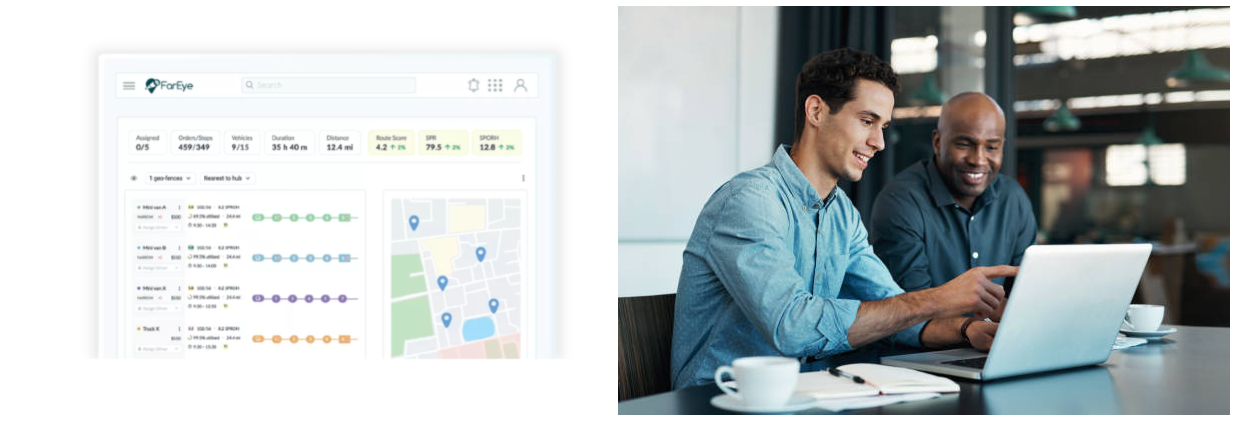
As delivery economics evolve and customer expectations rise, success belongs to operators who combine strategic acquisition, routine performance measurement, and adaptive AI-enabled routing. Explore how leading delivery orchestration platforms, such as FarEye, can help you maximise route profitability, operational visibility, and fleet productivity.
Staff Writer; Roy Jackson


-

Praise 24/7 Commercial Free
For every Show page the timetable is auomatically generated from the schedule, and you can set automatic carousels of Podcasts, Articles and Charts by simply choosing a category. Curabitur id lacus felis. Sed justo mauris, auctor eget tellus nec, pellentesque varius mauris. Sed eu congue nulla, et tincidunt justo. Aliquam semper faucibus odio id varius. Suspendisse varius laoreet sodales.
close

Post comments (0)