-
 play_arrow
Praise 24/7 NO Today's Best Gospel


When Blood Exposure Happens At Work: A Simple Response Plan.
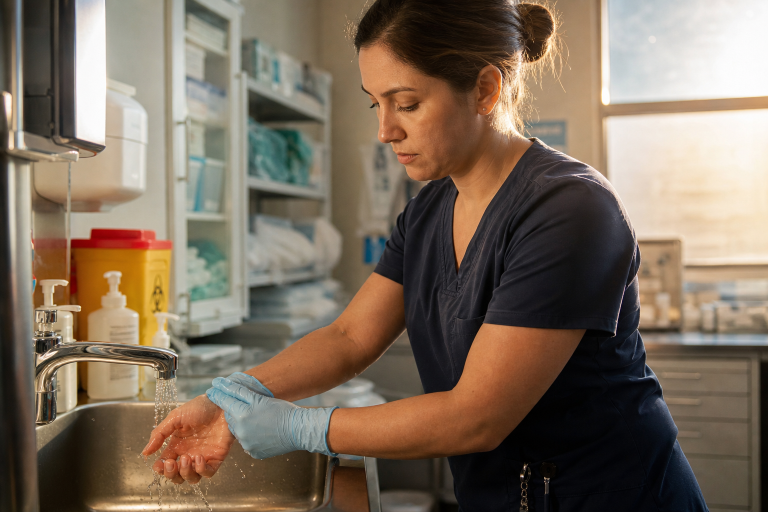
When Blood Exposure Happens At Work: A Simple Response Plan.
(ThyBlackMan.com)
Key Takeaways
- Stop the task safely and clean or flush the exposed area right away.
- Report the incident as soon as possible, even if the injury appears minor.
- Seek prompt medical evaluation rather than waiting for symptoms.
- Document what happened, including the material involved, exposure route, and protective equipment used.
- Use the workplace exposure control plan to guide follow-up and prevention.
A possible blood exposure at work can be stressful, particularly when it happens during a busy shift or an emergency. Knowing the basic steps before an incident occurs can help workers respond calmly and protect their health. Completing online bloodborne pathogens certification can also help employees understand common exposure routes, prevention practices, and reporting expectations.
These steps can be relevant to healthcare professionals, laboratory staff, first responders, custodians, childcare workers, teachers, personal service workers, and others who may encounter blood or other potentially infectious materials. Each workplace should have procedures that match its own risks, equipment, and reporting structure.
Why a Clear Response Plan Matters
After an unexpected puncture, cut, or splash, it is easy to feel uncertain about what to do first. A simple response plan reduces that uncertainty. It helps workers focus on immediate cleaning, timely reporting, and medical follow-up instead of trying to assess the entire situation alone.
Even a small injury deserves attention when blood or potentially infectious material may be involved. The type of fluid, how it contacted the body, and whether the skin was broken all affect the assessment. The workplace protections for bloodborne pathogens outline the importance of exposure control plans, safer work practices, protective equipment, and employer follow-up after covered exposure incidents.
What Counts as a Possible Exposure?
A possible occupational exposure can occur when blood or certain other potentially infectious materials enter the body through a puncture, a cut, a splash to the eyes, nose, or mouth, or contact with non-intact skin. Non-intact skin can include skin that is chapped, cracked, scraped, cut, or affected by dermatitis.
Common examples include:
- A needlestick or puncture from another sharp object.
- A cut from a sharp object hidden in trash, laundry, or cleaning materials.
- A splash of blood to the eyes, nose, or mouth.
- Blood contacting an open wound, rash, or damaged skin.
- Handling contaminated materials without the required protective barriers.
Intact skin is generally a stronger barrier than broken skin, but a worker should still follow workplace procedures whenever there is uncertainty. The goal is not to diagnose the risk alone. The goal is to report the facts promptly so the appropriate people can assess the incident.
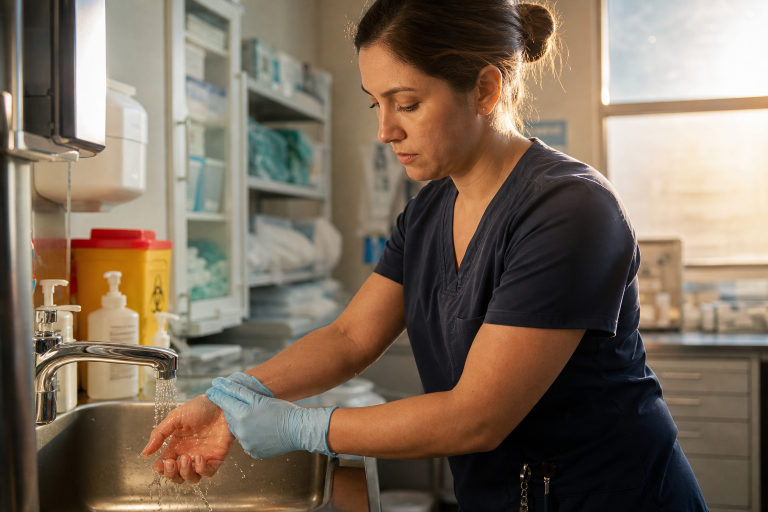
The First Five Minutes After Contact
- Stop the task safely. Step away from the hazard if possible, while avoiding actions that could cause another injury or expose someone else.
- Clean the area. Wash cuts, punctures, and skin contact with soap and water. Flush the eyes, nose, or mouth with clean water.
- Avoid harsh methods. Do not use bleach or other caustic chemicals on the skin. Do not scrub a wound aggressively.
- Report the incident. Notify a supervisor, manager, charge nurse, safety officer, or other designated contact immediately.
- Get medical guidance promptly. A qualified healthcare professional can evaluate the exposure details and determine appropriate next steps.
The CDC advises workers to wash punctures and cuts with soap and water, flush splashes to the nose, mouth, or skin with water, irrigate eyes with clean water or saline, report the incident, and seek medical care promptly. Its guidance on blood and body fluid exposure risks also explains why timely reporting supports both treatment decisions and prevention efforts.
How to Report the Incident Clearly
Reporting is not about assigning blame. It begins the workplace response process and creates information that may prevent a similar event from happening again. Give a clear, factual account while the details are fresh.
- Record the date, time, and exact location of the incident.
- Describe the task being performed when the contact happened.
- Identify the object or material involved, if known.
- Explain where the material contacted the body.
- Note whether the skin was cut, cracked, or otherwise damaged.
- List the gloves, eye protection, face protection, or other equipment in use.
- Include witnesses and relevant equipment details when applicable.
What Medical Follow-Up May Include
Medical follow-up should be confidential and based on the specific exposure. A healthcare professional may review the exposure route, the material involved, vaccination history, the source information available under applicable rules, and whether testing or additional follow-up is appropriate.
Workers should not wait for symptoms before asking for medical guidance. Some time-sensitive preventive options may depend on a prompt assessment. Follow all instructions provided by the evaluating clinician and workplace process, including any recommended follow-up visits, testing, precautions, or documentation.
Employer Duties After an Exposure
Employers with covered occupational exposure risks should maintain an exposure control plan and make sure workers know how to use it. Following an incident, the employer should direct the worker to the designated reporting and medical evaluation process, protect confidential medical information, and review what contributed to the event.
A useful review looks beyond individual actions. It may identify a full sharps container, missing protective equipment, unclear cleanup procedures, inadequate training, poor lighting, unsafe disposal practices, or equipment that could be replaced with a safer option.
Common Mistakes That Can Make the Situation Worse
- Waiting until the end of the shift to report a puncture or splash.
- Assuming a tiny scratch or brief contact does not matter.
- Ignoring exposure to the eyes, nose, or mouth.
- Applying bleach, strong disinfectants, or other harsh substances to a wound.
- Handling a sharp object with bare hands instead of following site procedures.
- Failing to document how the incident occurred.
- Returning to normal duties without checking workplace instructions.
How Different Workers Can Prepare
Healthcare and Laboratory Staff
Know the location of sharps containers, eyewash equipment, exposure contacts, and reporting forms. Use safety-engineered devices when provided, dispose of sharps immediately, and follow facility procedures before handling contaminated materials.
Teachers, Childcare Workers, and Personal Service Workers
Keep gloves and cleanup supplies accessible. Understand who receives incident reports and how to handle blood cleanup without direct hand contact. Small workplace preparations can make a stressful event easier to manage.
Cleaning, Maintenance, and Public Safety Staff
Inspect work areas before collecting waste or wiping surfaces. Use tools and approved containers for sharps rather than reaching into bags, bins, or tight spaces with unprotected hands. Report exposures even when the source person or object is unknown.
Questions Readers May Have
Should a worker report a minor scratch?
Yes. The supervisor and evaluating healthcare professional can determine whether the event meets the workplace definition of an exposure incident and whether follow-up is needed.
What if the source person is unknown?
Clean or flush the area, report the incident, and seek medical guidance. An unknown source does not eliminate the need for prompt action.
Can a worker return to the same task?
That depends on workplace procedures and the advice provided during the evaluation. Follow the directions of the designated supervisor and healthcare professional.
Conclusion
Blood exposure incidents require a practical response, not panic. Clean the exposed area, report the event immediately, seek prompt medical evaluation, and document the details. When workers understand the plan and employers review incidents carefully, the workplace is better prepared to prevent future exposures.
Staff Writer; Doug Short


-

D.K. Smith
For every Show page the timetable is auomatically generated from the schedule, and you can set automatic carousels of Podcasts, Articles and Charts by simply choosing a category. Curabitur id lacus felis. Sed justo mauris, auctor eget tellus nec, pellentesque varius mauris. Sed eu congue nulla, et tincidunt justo. Aliquam semper faucibus odio id varius. Suspendisse varius laoreet sodales.
close

Post comments (0)